Sometimes, during a bad skin week, you may run your fingers across your cheek and notice tiny bumps or small, rough patches. They are not quite pimples yet, but they do not feel like smooth skin either. Most people blame this on dirt or dryness and move on. The cause may begin below the skin’s surface.
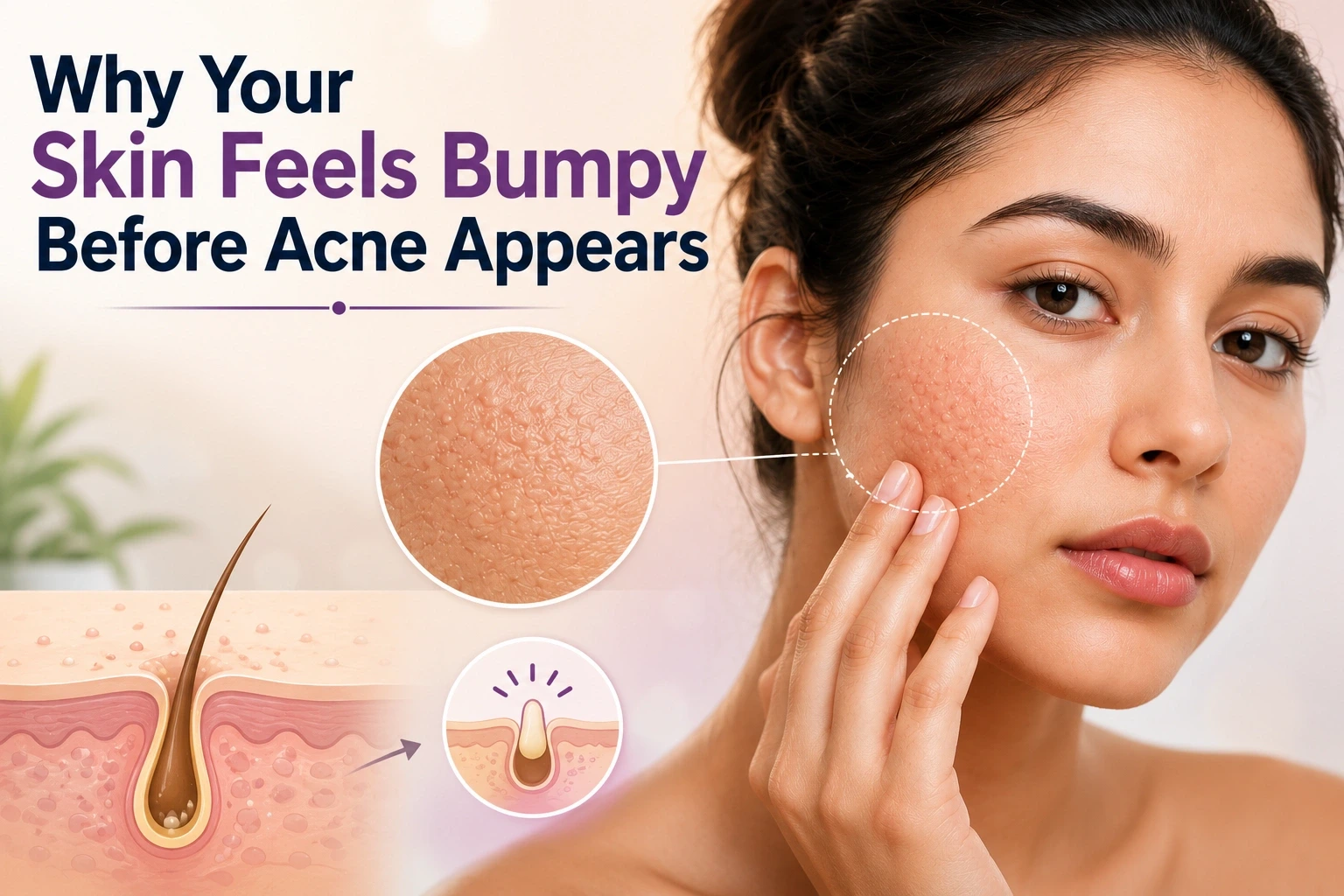
In reality, your skin feels bumpy before acne appears because microscopic pore blockages called microcomedones form beneath the skin before inflammation develops. These early blockages contain oil and dead skin cells, making the skin feel rough several days before a visible pimple forms.
According to the Cleveland Clinic, acne develops when excess oil, dead skin cells, and bacteria clog pores, often creating blockages before a visible pimple appears. Bumpy skin and acne are processes, and once you understand them, they become a lot easier to manage. In this article, we explain why your skin might feel bumpy before acne, what you can do to prevent it, and how to handle acne more healthily.
What Does Bumpy Skin Before Acne Mean?
Bumpy skin before acne usually means tiny pore blockages called microcomedones have formed beneath the surface. These blockages develop before redness, swelling, or visible pimples appear.
Each hair follicle is connected to a sebaceous gland that produces sebum, an oily substance that helps protect and moisturize the skin. Under normal conditions, sebum moves through the follicle to the skin’s surface while dead skin cells shed naturally. When this process runs smoothly, you barely notice your pores at all. Trouble starts when something interrupts that flow.
Too Much Oil Gets Made
Hormonal changes can increase sebum production, while stress and environmental factors may worsen acne in some people. The extra oil does not just sit there; it mixes with whatever else is already in the pore.
Dead Skin Cells Stick Together Instead of Shedding
Skin sheds constantly, but the cells near the surface of a clogged pore do not shed as they should. They cling to each other and stay put. Combine that with extra oil and the pore now holds a thick, sticky mixture instead of releasing it. This is called pore congestion.
The Plug Forms and Pushes the Pore Out of Shape
Dermatologists refer to this earliest stage of acne as a microcomedone, a microscopic blockage that forms inside the pore before an inflamed blemish develops. A microcomedone is an early microscopic blockage within the hair follicle that may develop before visible redness or swelling appears.
This plug physically changes the shape of the pore from the underside, which is exactly why the skin above it feels raised or grainy to the touch. These are the basic symptoms of clogged pores. Dermatologists usually focus on preventing microcomedones because every inflamed acne lesion starts with pore blockage.
How Does a Microcomedone Turn Into a Pimple?
.webp)
A pimple or rough skin texture does not appear out of nowhere. It builds through a fairly predictable sequence, and knowing where you are in that sequence changes how you should treat it:
- Oil increases: Oil glands ramp up production, often because of hormones or stress.
- Dead cells accumulate: Dead skin cells stop shedding normally and start sticking together.
- Microcomedone forms: Oil and cells combine into a plug too small to see with the eye.
- Pore expands: The plug grows and stretches the pore, creating the bump you can feel.
- Bacteria multiply: Bacteria that naturally live on skin start feeding on the trapped oil.
- Inflammation begins: Your immune system responds to those bacteria, and the bump turns into a red, inflamed pimple.
Some early bumps may resolve without becoming visibly inflamed, while others may progress into a more noticeable acne lesion.
Not Every Bump Feels the Same
The texture you feel depends on how deep the plug sits and whether it has any contact with air.
|
Type
|
What It Feels Like
|
Why It Happens
|
|
Closed comedone (whitehead)
|
A tiny, hard, skin-colored bump under a thin layer of skin
|
The pore stays sealed, so the trapped mixture cannot reach air
|
|
Open comedone (blackhead)
|
A rough speck with a dark, visible center
|
The pore stays open, so the debris oxidizes and darkens
|
|
Blind pimple or nodule
|
A deep, tender lump with no visible head
|
The plug and inflammation sit deep in the skin, further from the surface
|
Different types of acne bumps can feel similar, and it may be difficult to identify under-skin bumps accurately based on touch alone.
How to Handle Bumpy Skin Without Making It Worse
The goal is to clear the pores and what is trapped inside without damaging the skin around it. A few habits make the biggest difference here:
Salicylic Acid Gets Into the Pore
Salicylic acid is oil soluble, which means it can travel into the pore itself instead of sitting on top of the skin. Once inside, it breaks down the sticky mixture of oil and dead cells that formed the plug in the first place.
Retinoids Keep Cell Turnover On Schedule
Topical retinoids work differently. They speed up how quickly skin cells turn over, so dead cells clear out on schedule instead of piling up and sticking together. Over weeks of consistent use, this lowers how many new plugs form to begin with.
Picking Only Makes Things Worse
It is tempting to squeeze a bump the moment you feel it, but an uninflamed plug does not have a head to release yet. Pressing on it usually pushes bacteria deeper into the tissue, which raises the odds of a larger, more painful breakout and can leave a permanent mark behind.
Keep Skin Hydrated, Not Dried Out
Dehydrated skin often responds by producing even more oil to compensate, which feeds the exact cycle you are trying to break. A lightweight, non-comedogenic moisturizer keeps the skin barrier steady without adding to pore congestion.
Final Thoughts
That rough patch under your fingers, bumpy skin, and acne is real information about what is happening inside your pores, not something to ignore until it turns into a full breakout. Catching it early, with the right ingredients and a routine that supports your skin barrier instead of stripping it, changes the outcome more than any spot treatment applied after the fact. This can help you easily maintain your skin’s health and prevent any unnecessary outbreaks.
Pers. Active Lab, powered by the Skin Beauty Pal (SBP) AI app, builds routines around exactly this stage of skin, before the bump becomes a problem. Our AI app analyzes your skin, identifies early signs of congestion, and recommends a routine based on your skin instead of generic skincare trends. Start your personalized skin assessment with Pers. Active Lab today.
Frequently Asked Questions
Can I feel a microcomedone before it turns into a pimple?
Yes. Microcomedones sit under the surface, so you often feel a small, firm bump before any redness shows up. This is usually the earliest point where a product with salicylic acid or a retinoid can still make a real difference.
Why does my skin feel bumpy in the same spots every month?
Pores in certain areas, especially around the chin, jawline, and nose, tend to produce more oil due to gland density and hormonal sensitivity. These same spots get congested repeatedly unless the routine specifically targets oil buildup there.
Is a bumpy texture always acne, or can it be something else?
Not always. Clogged pores, mild congestion, and even product buildup can create a similar rough texture without turning into an actual pimple. If bumps are widespread, itchy, or spread out in a rash-like pattern, it is worth checking with a dermatologist rather than assuming it is acne.
Will exfoliating scrubs clear out these bumps faster than salicylic acid?
Physical scrubs mainly act on the surface, while the plug causing the bump sits deeper in the pore. Salicylic acid reaches that depth because it dissolves in oil, so it usually clears congestion more effectively than a scrub, and with less risk of irritation.
How long does it take for a felt bump to either disappear or turn into a pimple?
This varies by person, but a microcomedone can sit under the skin anywhere from a few days to a few weeks before it resolves or becomes inflamed. Consistent use of the right ingredients shortens that window and lowers the chance it turns into a full breakout.

 Member Center







 Successfully Added!