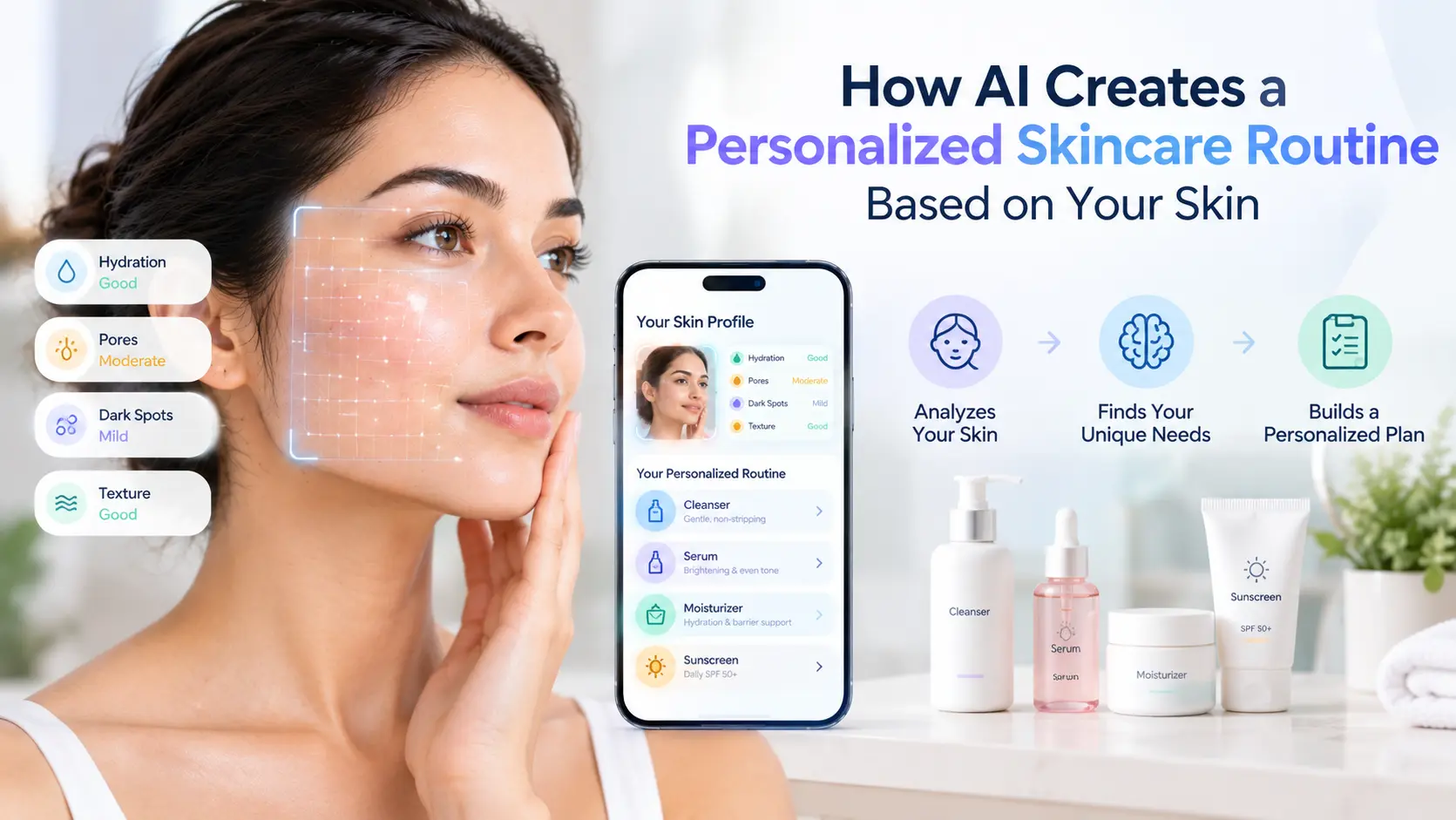
Most people build their skincare routine the same way: try a product a friend recommended, read a few reviews, hope it works. That approach ignores the one variable that actually matters, which is your own skin. Two people can both have "combination skin" on paper and still need completely different routines once you look closer. AI personalized skincare exists to fix exactly that problem by building a routine from an actual read of your skin instead of a guess based on someone else's results.
What Makes AI Personalized Skincare Different From a Quiz
A skin type quiz asks you questions and sorts you into a broad category: oily, dry, combination, sensitive. That's a reasonable starting point, but it misses a lot. Two people who both call themselves "oily" can have completely different pore sizes, hydration levels, and sensitivity thresholds.
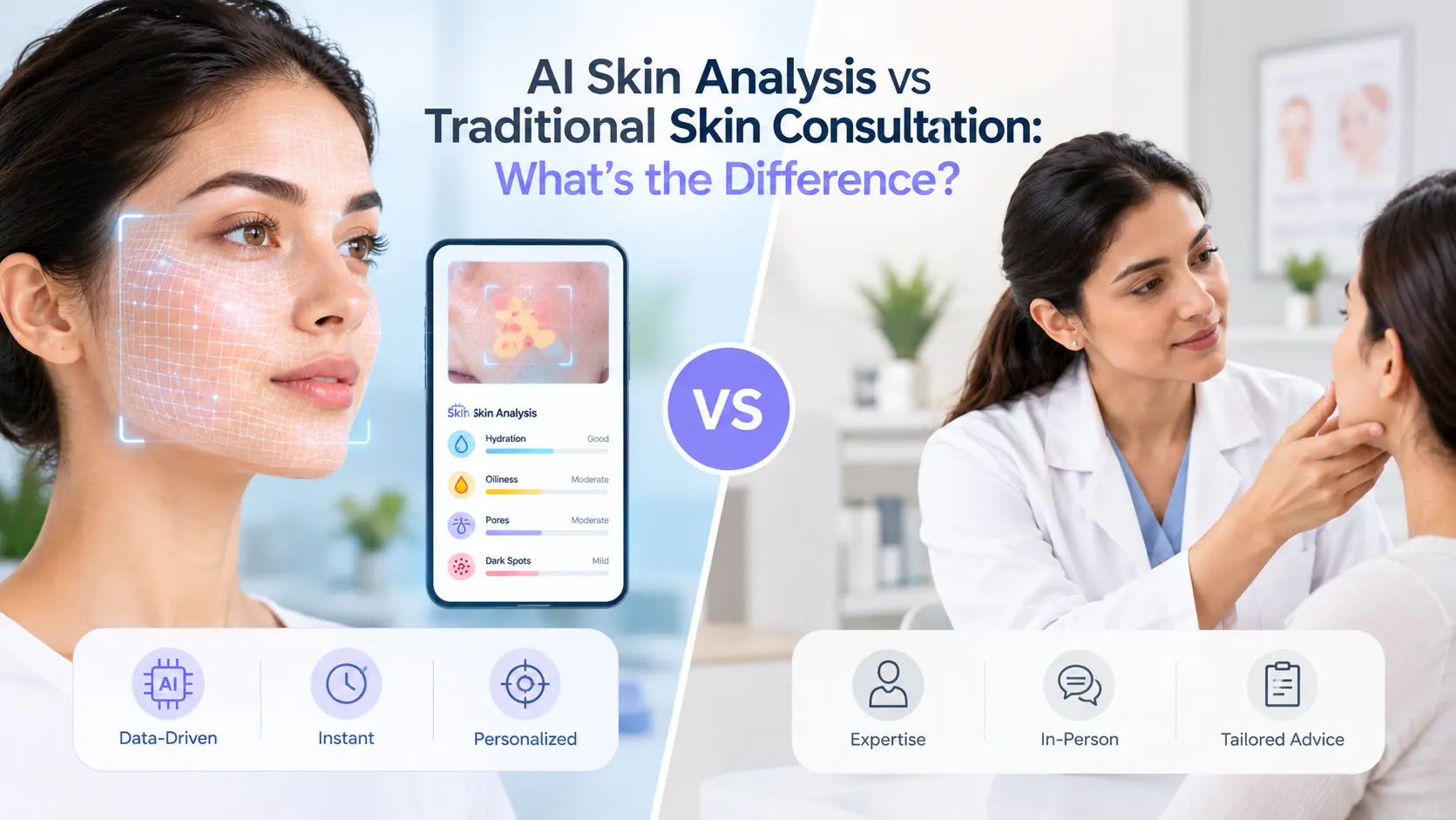
AI personalized skincare works from image data instead of self-reported guesses. A photo can show things a questionnaire can't, like early signs of dehydration around the eyes or texture changes that haven't become visible symptoms yet. The recommendation that comes out the other end is built from what your skin is actually doing, not from which box you checked.
How Accurate Is AI Skincare, Really?
Accuracy is the fair question to ask before trusting any of this. A 2024 academic study on an AI-assisted skincare recommendation system trained a convolutional neural network to classify skin issues from facial images, and reported an average accuracy of 93 percent in correctly identifying existing skin concerns. That's a meaningful number for a system working from nothing but a photo and a short set of questions.
Commercial tools report similar territory. La Roche-Posay's MyRoutine AI, built on the brand's own dermatological research, cites accuracy above 95 percent for its skin scan feature. These aren't marketing rounding errors. They reflect models trained on large, labelled datasets of real skin images, which is what separates a genuine AI skincare tool from a simple photo filter dressed up with a fancier name. The gap between a real model and a novelty filter usually shows up fastest in edge cases, like slightly uneven lighting or a face angled a few degrees off center- situations a well-trained model handles gracefully, and a shallow one doesn't.
How AI Skin Recommendations Actually Get Built
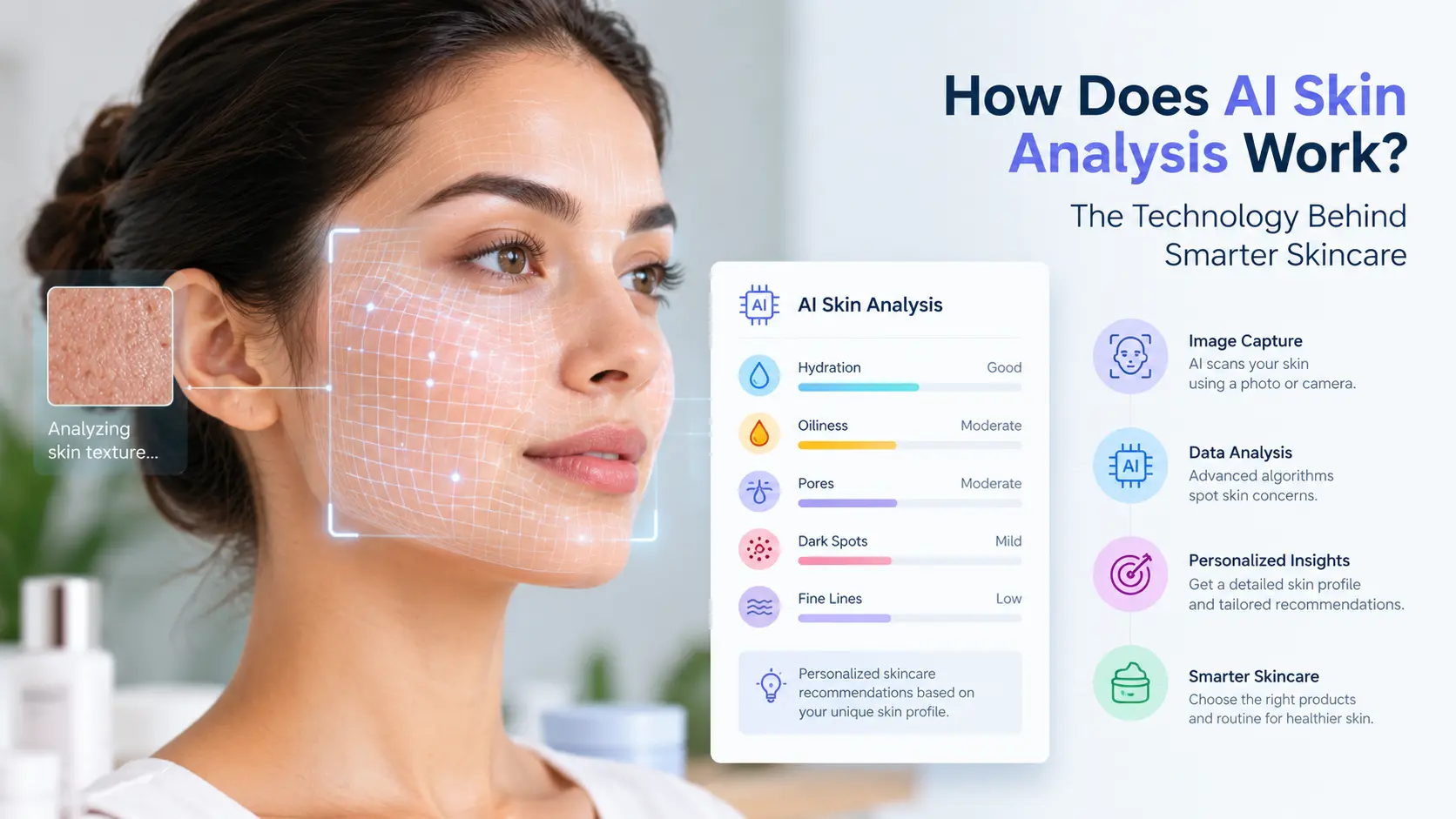
Behind the simple "scan your face, get a routine" experience, there's a fairly consistent process running underneath:
- Image and data capture: You upload a selfie, sometimes alongside a short questionnaire covering age, climate, and known concerns.
- Feature extraction: The model identifies specific markers: texture, tone evenness, visible pores, fine lines, and areas of redness or dryness.
- Classification: Each marker gets scored against known patterns, sorting your skin's current state into specific, named concerns rather than one broad category.
- Product matching: The system cross-references those concerns against an ingredient or product database, filtering for what actually addresses what your skin showed.
- Routine assembly: Matched products get sequenced into a morning and night routine, usually with guidance on order of application.
AI skin recommendations built this way are only as good as the product database behind them. A well-built model paired with a shallow catalog still produces a mediocre result, which is why the ingredient logic behind the match matters as much as the scan itself.
What the Scan Actually Looks At
A useful scan doesn't just say "you have dry skin." It breaks that down into specific, measurable factors, each of which points to a different kind of ingredient or product adjustment.
|
Factor Analyzed
|
What It Tells the System
|
|
Hydration level
|
Whether your routine needs more emollients or humectants
|
|
Pore visibility
|
Points toward exfoliation or pore-refining actives
|
|
Fine lines and texture
|
Signals whether retinoids or peptides should be prioritized
|
|
Redness and sensitivity
|
Flags whether stronger actives need to be introduced slowly
|
|
Pigmentation and tone evenness
|
Suggests brightening ingredients like vitamin C or niacinamide
|
None of these factors are read in isolation. A routine built around hydration alone, while ignoring visible sensitivity, is likely to include an active that irritates rather than helps, which is exactly the kind of mismatch a properly weighted model is built to avoid.
Where AI Skincare Tools Are Already Live
This isn't a future concept. La Roche-Posay's MyRoutine AI scans a selfie and returns a full routine in under a minute. Haut.AI licenses similar recommendation engines to other skincare brands, letting them offer scan-based product matching inside their own apps rather than building the technology from scratch. Several direct-to-consumer skincare brands have built their entire ordering process around a version of this, where the product formulation itself gets customized based on scan results rather than picked from a fixed shelf.
The pattern across all of these is the same: a photo replaces a guess, and the recommendation gets built from what's actually visible rather than a generic skin type label.
What AI Skin Recommendations Still Get Wrong
No scan-based system replaces a dermatologist, and it's worth being direct about where the limits sit. Photo quality affects results more than most users expect; poor lighting or an angled shot can throw off texture and tone readings. Underlying conditions like eczema, rosacea, or hormonal acne often need a clinical diagnosis that a photo-based model isn't built to make, since these conditions can look similar to ordinary dryness or breakouts in a single still image. And a single scan is a snapshot, not a trend, so results can shift based on things as simple as how well you slept the night before or how much water you drank that day.
Treat the output as a strong starting point, not a fixed prescription. If a scan keeps flagging something that doesn't improve after a few weeks of following its recommendation, that's a signal to see a professional rather than adjust the routine again on your own.
Getting the Most Out of a Skin Scan
A few habits noticeably improve the quality of what the system returns:
- Use natural, even lighting rather than harsh overhead light or a dim room.
- Keep your face bare, no makeup, sunscreen, or heavy moisturizer right before scanning.
- Rescan every few weeks rather than daily, since skin doesn't change meaningfully day to day.
- Answer any accompanying questions honestly, including ones about current products, since conflicting actives can throw off the match.
- Note any recent changes, like a new medication or a shift in climate, since these often explain sudden results that don't match your usual pattern.
Conclusion
Building a skincare routine used to mean trial, error, and a drawer full of half-used products that never quite worked. A proper scan-based system replaces that guesswork with actual AI-personalized skincare, then builds a routine around what it finds instead of a generic label.
At Pers Active Lab, this is the exact problem our scan technology is built to solve. Try it for yourself and get a routine built from your own skin.
FAQs
1. Is AI skincare analysis actually accurate, or is it just marketing?
Accuracy depends on the model and training data behind it, with published studies and commercial tools reporting figures in the 90–95% range for identifying visible concerns. Results still vary with photo quality and lighting, so treat the score as a strong estimate, not a lab result.
2. Can AI skincare tools replace a dermatologist visit?
No. AI scans are built to guide everyday routine choices, not to diagnose conditions like eczema, rosacea, or hormonal acne, which need a clinical exam.
3. Is it safe to upload a photo of my face to an AI skincare app?
Reputable platforms process images securely and outline this in their privacy policy, so it's worth checking that before signing up. Avoid apps that are vague about how long they store your photos or who else can access them.
4. How often should I rescan my skin with an AI tool?
Every few weeks is enough, since skin doesn't change meaningfully day to day. Scanning too often just adds noise without giving the model a real shift to measure.
5. Does AI skincare work the same for all skin tones and types?
Not always. Performance depends on how diverse the training dataset was, and some tools are still better calibrated for certain skin tones than others.




 Successfully Added!