A pimple can disappear in a few days. The dark mark it leaves behind can stay for months. Your skin may also look dull or tired even after the original problem is gone.
This happens because pigment can remain active after inflammation has settled. Sun exposure can also keep triggering melanin production. In 2026, a review in the American Journal of Clinical Dermatology reported that up to 85% of people with Fitzpatrick skin types IV–VI may develop post-inflammatory hyperpigmentation after inflammatory acne lesions, and the review also notes that these marks can last for months or even years.
So, why dark spots persist is often linked to several factors at the same time. In this article, we’ll explore why dark spots don’t go away, and how to manage uneven skin tone.
Why Dark Spots Persist After The Original Trigger Is Gone
Your skin makes melanin. Melanin gives your skin its natural color. When your skin becomes inflamed, melanocytes can become more active. These are the cells that make melanin. The extra pigment can then leave a brown or dark mark after the inflammation has settled.
Acne is one common trigger. So are cuts, and skin irritation. This is called post-inflammatory hyperpigmentation.
The mark can remain after the skin looks healed. In some cases, pigment can also sit deeper in the skin. Deeper pigment can take much longer to fade.
A 2024 systematic review looked at 48 studies with 1,356 people with skin of color. Most cases were linked to inflammation. The face was also the most common site. The review found that PIH can be hard to treat and may last for a long time. This helps explain why dark spots persist even when the original skin problem is no longer visible.
What Keeps Pigmentation Active and Skin Looking Dull?

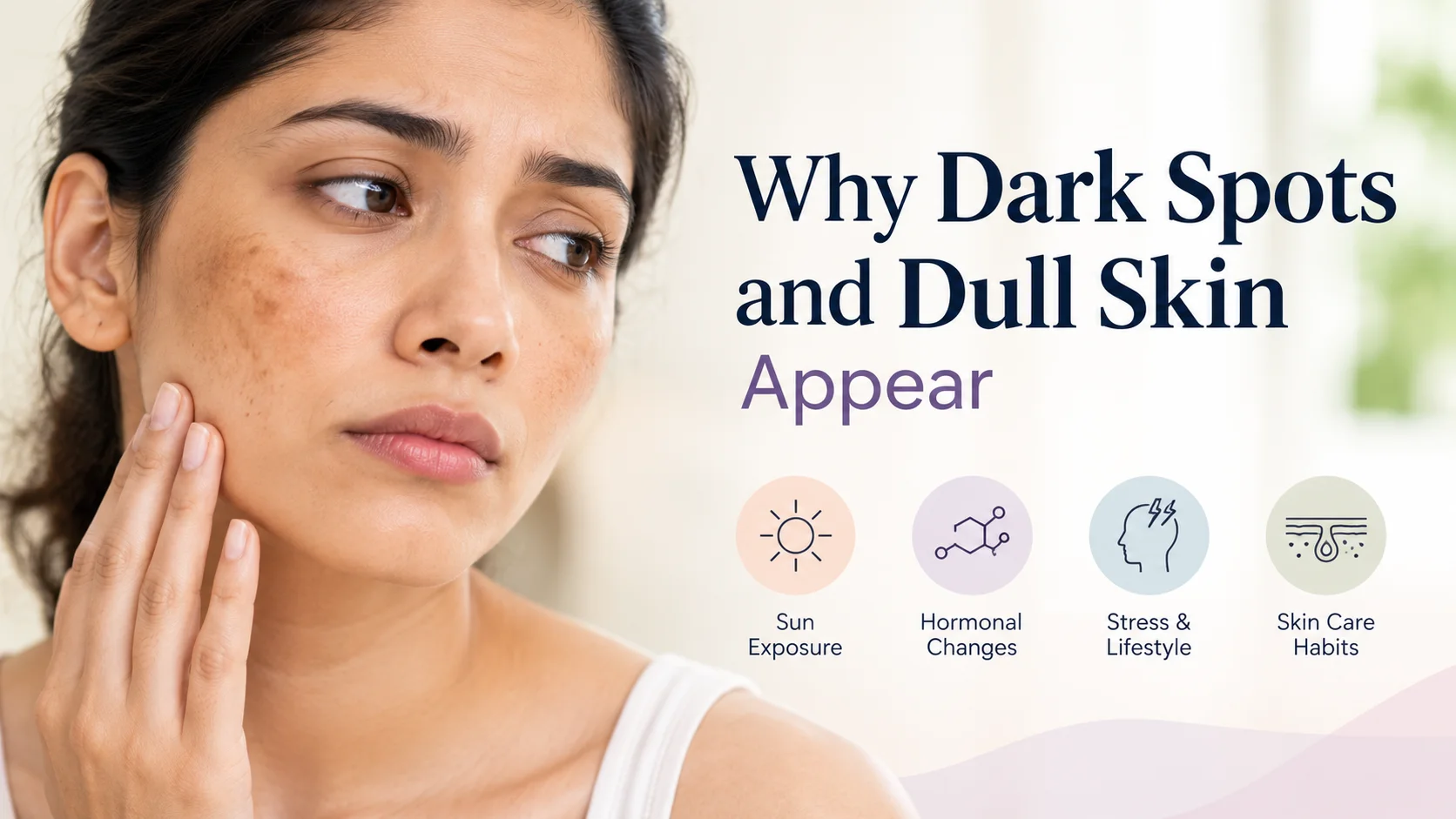
Several factors can keep dark spots from fading, even after the original trigger has passed. Sun exposure, acne, inflammation, dryness, and skin irritation can all affect how your skin looks over time. Here are the key factors that can make pigmentation harder to manage.
1. Repeated UV Exposure Can Keep Dark Marks Active
One of the main causes of dark spots is repeated sun exposure. You do not need to get sunburned for sunlight to affect pigmentation. UV exposure can stimulate melanin production. It can also make existing dark marks look darker.
This creates a common problem. You may use a serum at night. But during the day, your skin may receive repeated sun exposure. This can work against your efforts to fade the mark.
The cycle can look like this:
- Acne causes inflammation.
- The inflammation triggers extra melanin.
- The acne clears.
- A dark mark remains.
- Sun exposure stimulates more pigment.
- The mark takes longer to fade.
Sun protection is therefore a key part of managing pigmentation. The American Academy of Dermatology recommends broad-spectrum sunscreen with SPF 30 or higher. For darker skin tones, tinted sunscreen with iron oxide can also help protect against visible light.
2. Acne Can Leave Marks Long After The Pimple Is Gone
Acne is one of the most common causes of dark spots. The pimple itself may last for days or weeks. The mark can last much longer. Inflammation from acne can increase melanin production. This can leave a brown or dark patch after the pimple heals.
The risk can be higher in darker skin tones. The American Academy of Dermatology notes that acne often leaves dark spots in people with skin of color, and it also recommends treating the acne itself to reduce the chance of new marks.
Its 3% tranexamic acid and 2% niacinamide target pigmentation and support the skin barrier. This is why picking at a pimple can cause problems.
When you squeeze or scratch a spot, you can increase skin injury and inflammation. That can increase the chance of another dark mark. The simple rule is clear: Treat the acne and avoid damaging the skin around it.
3. Skin Inflammation Can Keep Affecting Pigmentation
Inflammation does not always look severe. Your skin may no longer look red or swollen. The pigment response can remain. This is one reason pigmentation can be difficult to manage.
A 2024 review found that 89% of the PIH cases included in its analysis followed inflammatory conditions. It also found that 83% of the reported cases affected the face. Repeated irritation can add another problem.
Strong scrubs and products that sting can irritate your skin. That irritation may lead to more pigmentation.
The American Academy of Dermatology advises people with dark marks to use gentle skin care. It also warns that irritation from skin care products can make dark spots worse. So, more irritation does not mean faster results. In many cases, it can make the problem harder to manage.
4. Uneven Skin Cell Turnover Can Add To Dullness
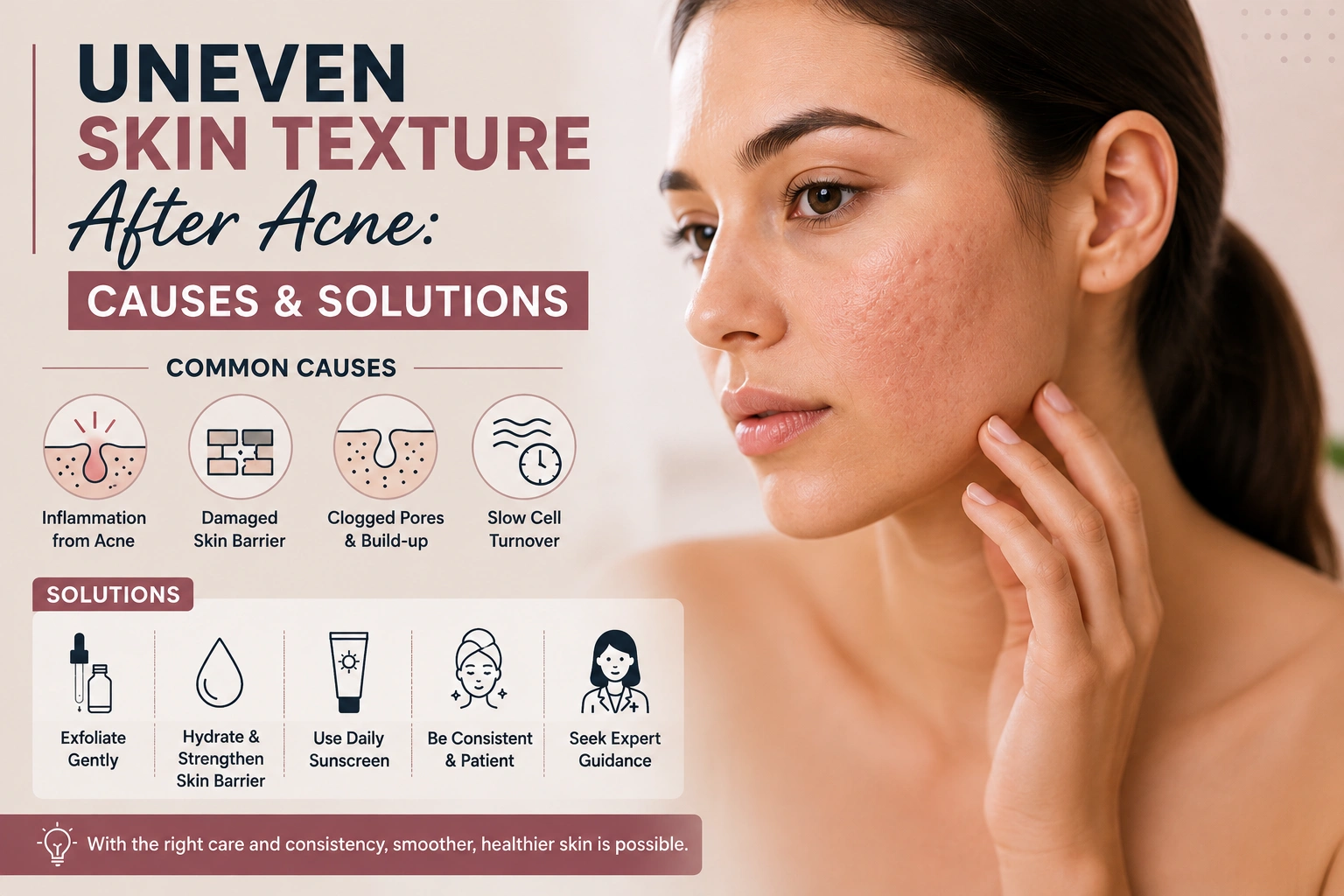
Your skin is always renewing itself. Older cells move toward the surface and are eventually shed. Newer cells replace them. When the surface becomes dry or uneven, your skin may look rough. It may also reflect light less evenly. This can make your complexion look dull.
These are some of the causes of dull skin. Dead skin cells are one factor. Dryness is another. But, skin irritation can also affect how smooth the surface looks.
This does not mean you need to scrub harder. Strong exfoliation can irritate your skin. That is especially important when you already have pigmentation.
The American Academy of Dermatology recommends choosing exfoliation based on your skin type and avoiding harsh methods that cause irritation. A calm skin barrier is often a better starting point than constant scrubbing.
5. Dry Skin Can Make Uneven Tone Look Worse
Pigmentation is not the only reason skin can look dull. Dry skin can make the surface look rough. Small flakes can also make your skin tone look less even. This is another of the causes of dull skin.
Hydration can help improve the look and feel of dry skin. But, hydration alone does not remove excess melanin. That distinction matters.
A moisturizer can support the skin barrier. But a pigmentation-focused ingredient works on a different part of the problem. You may need both.
6. Poor Sun Protection Can Keep Resetting Your Progress
Another reason why dark spots persist is inconsistent sun protection. You may notice that a mark becomes lighter during one period and darker again later. Sun exposure can be part of the reason.
The American Academy of Dermatology recommends applying sunscreen before going outdoors. It recommends SPF 30 or higher and water resistance. When outdoors, sunscreen should generally be reapplied about every two hours and after swimming or sweating, according to the product directions.
For pigmentation-prone skin, visible light also matters. Tinted sunscreens with iron oxide can help protect against visible light, and this can be especially useful for people with darker skin tones.
Other simple steps can help too:
- Spend less time in strong direct sun.
- Use shade when possible.
- Wear a wide-brimmed hat outdoors.
- Apply sunscreen to exposed skin.
- Reapply when needed.
Good sun protection helps reduce new pigment while your existing marks fade.
Why Pigmentation Can Be Hard To Manage
The skin pigmentation that causes one mark may be very different from that behind another. You may have one or several triggers. Common factors include:
- Acne
- Skin inflammation
- UV exposure
- Visible light
- Hormonal changes
- Skin irritation
- Picking or scratching
- Burns or other skin injuries
- Certain medicines
- A personal tendency to develop PIH
The American Academy of Dermatology notes that hyperpigmentation can follow acne, and some medicines. The depth of the pigment also matters. Pigment closer to the surface may fade sooner. Deeper pigment can take much longer.
The AAD notes that a dark spot can take around six to 12 months to fade once its trigger has stopped. Deeper discoloration can take years. This is another reason why dark spots persist. The skin may need time even after you remove the original trigger.
Where Rv24 Can Fit Into A Pigmentation Routine

For persistent pigmentation on the face, your routine needs to do two things. First, it should help improve the appearance of existing marks. Second, it should reduce the factors that can create new marks.
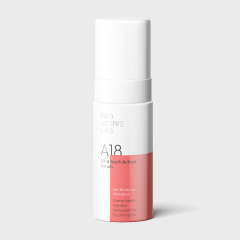
RV24 contains 3% tranexamic acid and 2% niacinamide, and its listed formula also includes hyaluronic acid and Ceramide NP. These ingredients give the product a role in a routine focused on pigmentation and skin hydration.
Tranexamic acid has been studied for pigmentation, especially melasma. A 2024 meta-analysis reviewed 22 studies with 1,280 patients. It found that tranexamic acid reduced measures of melasma severity. However, the studies used different doses, and treatment periods. The researchers said more research is needed to create more consistent treatment methods.
A separate 2024 randomized trial compared topical 3% tranexamic acid with 4% hydroquinone in 20 people with skin of color and mixed-type melasma. Both groups showed a reduction in melasma severity after four and eight weeks. The study found no significant difference in improvement between the two groups.
These findings support the use of topical tranexamic acid as one option for pigmentation care. They do not mean every dark spot will respond in the same way.
Niacinamide is also used in pigmentation-focused skin care and it can help reduce the transfer of pigment within the skin and can support the skin barrier.
RV24 can therefore fit into a simple routine aimed at dark spots and uneven tone. It should not replace sunscreen. Sun protection remains a key part of pigmentation care.
A Simple Routine Is Easier To Maintain
You do not need a long routine. Too many strong products can irritate your skin and that can make pigmentation harder to manage. A simple routine may look like this:
Morning
- Use a gentle cleanser.
- Apply your pigmentation serum.
- Use moisturizer if your skin needs it.
- Apply broad-spectrum SPF 30 or higher.
Night
- Clean your face gently.
- Apply your pigmentation treatment, such as RV24.
- Apply moisturizer.
Start new active products slowly. Do not keep using a product that causes strong burning, or irritation. The AAD advises stopping irritating products, as they can worsen dark spots. Consistency matters because pigmentation usually does not disappear overnight.
Why Dark Spots Persist Despite Using Skincare
You may already use several products and still see marks. That does not always mean the products are useless. The original trigger may still be present.
For example:
- You still have active acne.
- You spend a lot of time in the sun.
- You skip sunscreen.
- You use products that irritate your skin.
- You keep picking at new breakouts.
- The pigment sits deeper in the skin.
- You are treating the wrong type of pigmentation.
This is why dark spots persist in some people despite regular skincare. The first step is to identify what is causing the pigment. Then you can build a routine around that cause.
When Facial Pigmentation Needs Medical Attention
Persistent facial pigmentation is not always a simple cosmetic issue. Different conditions can look similar. A dermatologist can check whether your mark is linked to acne, or another skin condition.
See a dermatologist when:
- A dark spot changes quickly.
- A mark has an unusual shape.
- A spot bleeds or forms a crust.
- A mark does not heal.
- Pigmentation appears without a clear trigger.
- Your skin becomes darker very quickly.
- The problem keeps spreading.
- Your marks do not improve with gentle skin care.
The American Academy of Dermatology also advises seeing a dermatologist when acne and the dark marks it leaves are not improving. Do not assume every brown spot is ordinary pigmentation. A proper diagnosis can prevent you from treating the wrong problem.
Conclusion
Understanding why dark spots persist can change the way you care for your skin. A dark mark may remain long after acne or inflammation has gone. Sun exposure can make it darker. New acne can create more marks. Irritation can add another layer to the problem.
The causes of dull skin can also overlap with pigmentation. Dryness, and uneven skin renewal can all affect how your complexion looks.
The answer is usually not a stronger product or a longer routine. Start with the cause. Treat active acne. Avoid picking. Keep your routine gentle and protect your skin from UV and visible light. Give pigmentation time to fade. For people dealing with persistent pigmentation on face, a product such as RV24 can be part of that routine. Its 3% tranexamic acid and 2% niacinamide formula targets pigmentation and supports the skin barrier.
The goal is steady care. That same practical approach is reflected in the skincare philosophy of PERS ACTIVE LAB.
FAQs
1. Why do dark spots remain after acne disappears?
Acne causes inflammation. That inflammation can increase melanin production. The acne may clear first, while the extra pigment remains. This is called post-inflammatory hyperpigmentation and it can last for months and, in some cases, much longer.
2. What are the main causes of dark spots?
Common causes include acne, skin inflammation, injuries, irritation, hormonal changes, medicines, and sun exposure. But, the exact cause matters because treatment depends on what triggered the pigment.
3. Can sunscreen help with pigmentation?
Yes. Sunscreen helps protect against UV exposure that can darken pigmentation. For people with darker skin tones or pigmentation concerns, a tinted sunscreen containing iron oxide can also help protect against visible light.
4. How long can dark spots take to fade?
The time varies. Some marks fade within months. The American Academy of Dermatology notes that a spot may take around six to 12 months to fade after its trigger has stopped. Deeper pigment can take much longer.
Take our quick skincare quiz and test your brightness knowledge! Participate and Win!!
💬 Choose your answer in the comments and stand a chance to win free skincare product!
Which ingredient is commonly used in skincare to help improve the appearance of dark spots and uneven skin tone?
- A. Tranexamic acid
- B. Peppermint oil
- C. Fragrance
- D. Mineral oil






 Successfully Added!