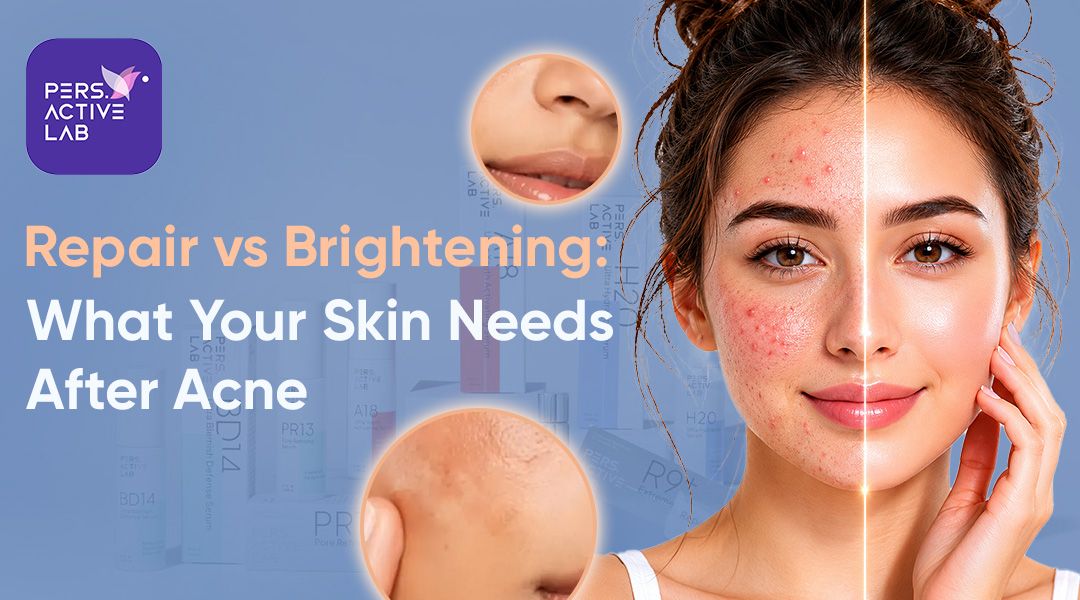
Acne does not always end when pimples go away. Your skin can stay dry or marked for weeks. Some people focus on fading dark spots right away. Others try repair products first. This can make choosing products confusing.
Understanding acne repair vs brightening helps you build a routine that matches your skin needs. Repair products support healing. Brightening products target dark marks and uneven tone. Using the wrong products too early may slow progress.
This guide explains what happens after acne and how to choose the right approach for better acne recovery skincare.
What Happens to Skin After Acne?
Acne affects more than the surface of your skin. Breakouts can weaken your skin barrier. They may also leave marks that stay long after healing.
You may notice:
- Redness that fades slowly
- Dark spots after pimples heal
- Rough or uneven texture
- Dryness from acne products
- Sensitivity and irritation
- Weak skin barrier
Your skin may need healing before it needs brightening. That is why acne repair vs brightening matters.
What Does Skin Repair Mean?
Skin repair means helping damaged skin recover. It supports hydration and reduces irritation. It also helps rebuild the skin barrier.
Repair products often aim to:
- Support skin barrier function
- Reduce dryness
- Improve moisture levels
- Calm irritated skin
- Help with healthy skin renewal
A skin repair serum usually contains ingredients that focus on recovery. These products may help after strong acne treatments or repeated breakouts.
Top 5 Common Ingredients in Repair Products
Repair products help stressed skin recover. Some ingredients improve hydration. Others support the skin barrier or calm irritation. So, knowing what these ingredients do can help you pick products with more confidence.
1. Ceramides
Ceramides are natural fats found in your skin. Acne treatments can reduce them over time. When levels drop, your skin may feel dry or weak.
That is why ceramides appear in many repair products.
Key facts:
- Help reduce moisture loss
- Support softer skin
- Help protect the outer skin layer
Ceramides support long-term skin comfort. They work well for skin that feels tight after acne treatment. Stronger skin barriers may react less to daily stress.
2. Hyaluronic Acid
Hydration plays a big role in recovery. Skin that lacks moisture may feel irritated faster. This is common after acne treatments.
Hyaluronic acid helps keep moisture in the skin.
Key facts:
- Supports hydration
- Helps reduce tight feeling skin
- Can improve smoothness
Hydrated skin often feels calmer. Moisture may also help your skin tolerate other products better. This makes hydration important during acne recovery skincare.
3. Panthenol
Panthenol is a form of vitamin B5. It is known for calming stressed skin. Many repair products include it for this reason.
Its soothing effect makes it useful after irritation.
Key facts:
- Helps calm redness
- Supports moisture retention
- May reduce dry feeling skin
Skin often recovers better when irritation decreases. Panthenol works well in routines focused on repair. It is common in products made for sensitive skin.
4. Centella Asiatica
Centella Asiatica comes from a plant. It is often used in products made for sensitive or irritated skin. Some people use it after breakouts.
Its calming properties make it popular in repair products.
Key facts:
- Supports skin recovery
- Helps reduce visible redness
- May calm stressed skin
Recovery takes time after acne. Gentle ingredients may help your skin feel more balanced. So, starting with calming products can support long-term repair.
5. Niacinamide
Niacinamide supports several skin functions. It can help with barrier support and uneven tone. This makes it useful in repair and brightening routines.
That is why it is found in many skincare products.
Key facts:
- Supports smoother texture
- Helps manage excess oil appearance
- Supports skin barrier function
Niacinamide is often used in different strengths. Lower levels may focus on repair. Higher levels may target tone concerns.
Acne Repair vs Brightening: What Is the Difference?
| Feature |
Acne Repair |
Brightening |
| Main goal |
Help damaged skin recover |
Improve uneven tone |
| Focus |
Barrier support |
Fade acne marks |
| Best for |
Dryness, irritation, sensitivity |
Dark spots after acne |
| Common ingredients |
Ceramides, panthenol, centella |
Vitamin C, alpha arbutin, niacinamide |
| Results |
Calmer and stronger skin |
More even-looking skin |
| Helps with redness |
Yes |
Sometimes |
| Helps with dark spots |
Limited |
Yes |
| Product example |
Skin repair serum |
Brightening serum for acne marks |
Knowing the difference between acne repair vs brightening helps you avoid using strong products before your skin is ready.
How to Know What Your Skin Needs
Your skin gives signs about what it needs. Paying attention to those signs helps you choose the right routine.
1. Your Skin Feels Tight or Burns Easily
Skin that burns after products may need repair first. Tightness can also mean your barrier feels weak.
Watch for these signs:
- Dry patches
- Stinging after cleansing
- Increased sensitivity
Repair products may help reduce stress on your skin. Healing first often makes later treatments easier to use.
2. You Have Dark Marks but No Irritation
Some people stop getting acne but still have marks left behind. This often points to pigmentation concerns.
Look for:
- Brown marks
- Red acne spots
- Uneven skin tone
A brightening serum for acne marks may help when your skin feels stable. Brightening products often work better when irritation is low.
3. You Have Sensitivity and Dark Marks
Many people deal with both problems at once. Repair often needs to come before brightening.
Common signs include:
- Dry skin with dark spots
- Sensitivity and uneven tone
- Frequent irritation
Adding brightening products slowly may reduce the chance of more irritation. Patience helps during recovery.
Why Repair Often Comes Before Brightening
Your skin barrier acts like protection. Brightening products may feel harsh when that barrier is weak.
Repair first may help:
- Reduce irritation
- Improve moisture balance
- Support better tolerance to active ingredients
Healthy skin often responds better to pigmentation repair products.
Common Mistakes After Acne
Trying to fade marks too fast can slow recovery.
Avoid these mistakes:
- Using too many active ingredients together
- Ignoring hydration
- Starting brightening before repair
- Skipping sunscreen
- Changing products too often
Consistency matters in acne recovery skincare.
Conclusion
The answer to acne repair vs brightening depends on what your skin needs right now. Dry, or irritated skin often benefits from repair first. Dark marks without irritation may respond better to brightening ingredients.
Recovery takes time. Small changes and steady routines often work better than rushing results. Products that support repair and gradual pigmentation repair may help your skin recover more comfortably. Skin Pal offers skincare options designed to support post-acne care while focusing on healthier-looking skin over time.
FAQs
1. What is the difference between acne repair and brightening?
Acne repair focuses on healing and supporting the skin barrier. Brightening focuses on improving uneven tone. Repair often helps reduce dryness and sensitivity before targeting pigmentation.
2. Can I use a skin repair serum and brightening serum together?
Yes. Start with repair if your skin feels irritated. Add brightening products later when your skin feels more stable. Introducing products slowly may help lower the risk of irritation.
3. How long does pigmentation repair take after acne?
It depends on your skin and the marks. Some spots fade in weeks, while others take months. Regular sunscreen use may help prevent marks from becoming darker.
4. When should I use a brightening serum for acne marks?
You can start when your skin barrier feels stronger. Skin that feels calm and hydrated often responds better to brightening products.






 Successfully Added!