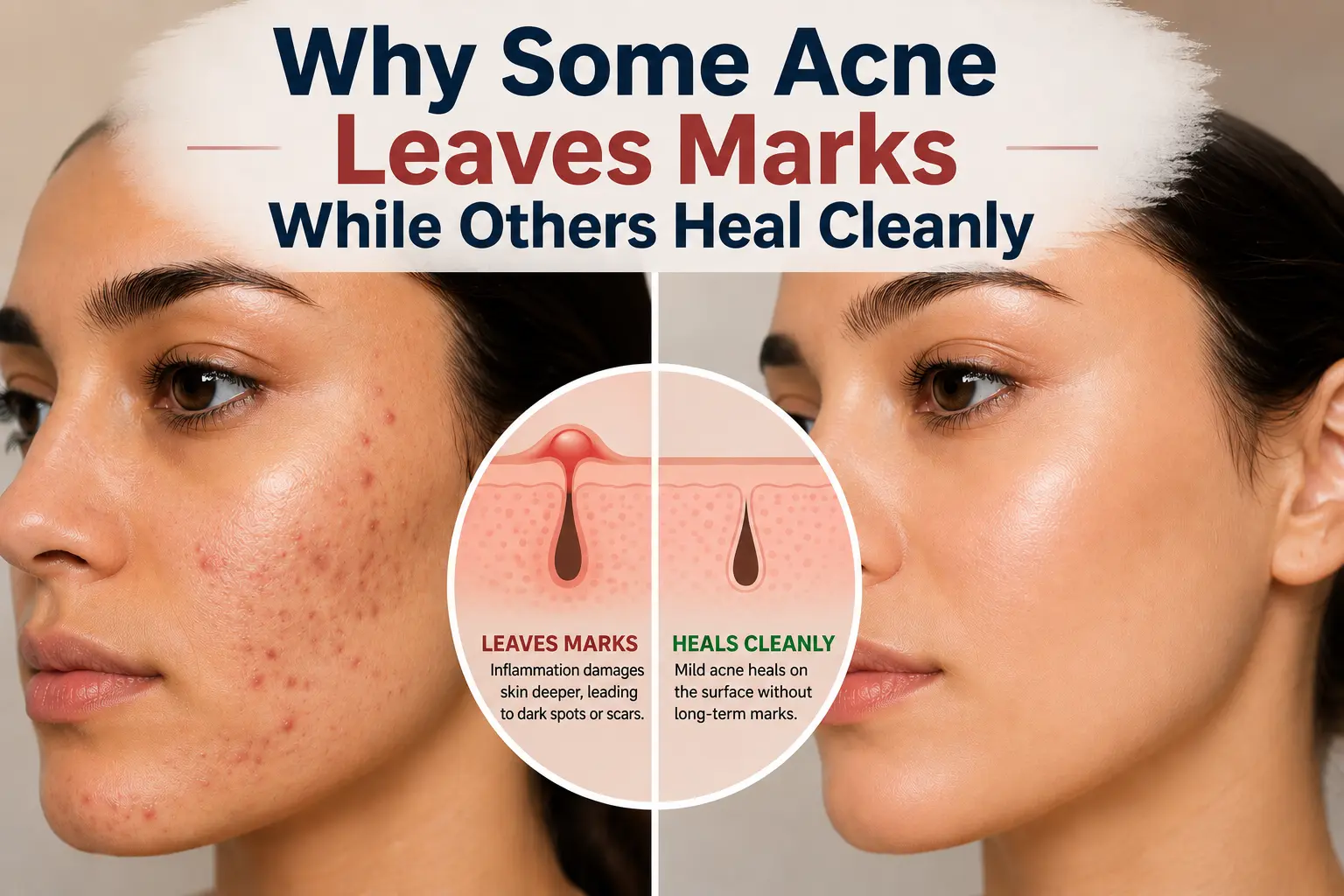
You may notice that one pimple disappears without a trace, while another leaves a dark spot that lingers for months. This difference is common and depends on how deeply the inflammation affected your skin and how your body repairs the damage.
According to the American Academy of Dermatology, deep acne breakouts such as cysts and nodules are much more likely to leave scars, and picking or squeezing pimples further increases that risk. The answer comes down to how your skin responds to inflammation and repairs itself after damage. Some breakouts affect only the upper layers of the skin, while others reach deeper and change the collagen structure that supports your skin. Your habits, genetics, and sun exposure also influence the final result.
Understanding the causes of acne marks can help you take better care of your skin and lower the risk of long-term marks or scars. This article explains the reason why some acne leaves marks and how to prevent or treat them.
Why Does Acne Heal Differently From Person to Person?
Every breakout follows the same basic process. A pore becomes blocked with oil, dead skin cells, and bacteria. Your immune system reacts to remove the blockage and repair the damaged tissue.
The difference appears during healing. Some blemishes stay close to the skin's surface, allowing new skin cells to replace damaged ones without leaving visible signs. Others create enough damage to affect the deeper layers of the skin. When that happens, your body has a much harder job repairing the area. The result may be temporary discoloration or permanent textural changes.
The Role of Inflammation in Skin Healing
The biggest factor behind lasting marks is acne inflammation. Inflammation is your body's natural repair response. It helps remove bacteria and damaged cells. A mild response usually heals well, but severe inflammation can damage nearby tissue, blood vessels, and collagen.
The more tissue damage your skin faces, the greater the chance that healing will leave something behind. This explains why large, painful pimples usually leave marks more often than tiny whiteheads.
Acne Marks and Acne Scars Are Not the Same Thing
Many people use these terms interchangeably, but they describe different skin changes.
Acne Marks
Marks affect skin color but not skin texture. They usually fade over time because the skin remains structurally intact.
These marks often appear as:
- Brown spots
- Black spots
- Pink patches
- Red patches
- Purple discoloration
Acne Scars
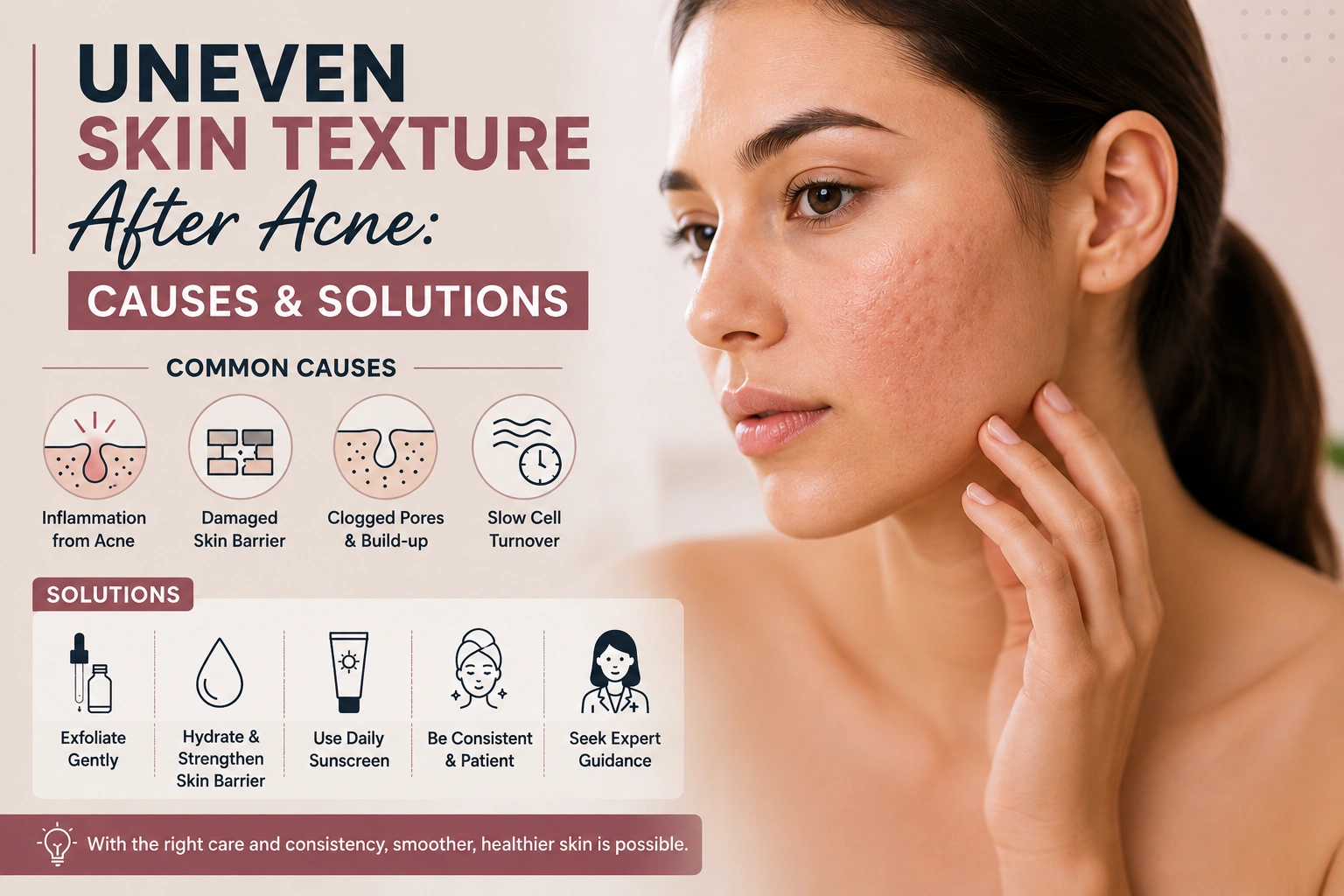
Scars develop after damage reaches the deeper layers of the skin. Instead of changing color alone, scars change the skin's texture because collagen heals unevenly.
Some scars look like tiny pits, while others appear raised above the surrounding skin. Knowing this difference helps you choose the right treatment instead of expecting one product to solve every concern.
What Causes Brown Marks After Acne?
Brown spots are known medically as Post-Inflammatory Hyperpigmentation, or PIH. They form when inflammation stimulates pigment-producing cells called melanocytes. These cells create extra melanin while your skin heals.
Instead of fading immediately after the pimple disappears, the extra pigment remains behind.
This type of pigmentation after acne is especially common in medium and darker skin tones.
Sun exposure can make these spots darker and extend the time they remain visible.
Why Do Some Pimples Leave Red Marks?
Not every mark is caused by excess pigment. Some pimples leave behind red or pink areas because inflammation affects tiny blood vessels beneath the skin.
Doctors refer to this as Post-Inflammatory Erythema, or PIE. These marks are usually seen more often in lighter skin tones.
Unlike brown marks, PIE relates to changes in blood vessels instead of melanin production. Although they usually improve with time, they often fade slowly without proper skincare and sun protection.
When Acne Turns Into Permanent Scars
Scars form after deeper tissue damage. Your body repairs damaged skin by producing collagen. The amount of collagen produced determines the type of scar.
Too Little Collagen
When your body produces too little collagen, the skin cannot completely fill the damaged area.
This creates depressed scars such as:
- Ice pick scars
- Boxcar scars
- Rolling scars
Too Much Collagen
Sometimes your body produces excess collagen while repairing damaged tissue.
This creates raised scars called:
- Hypertrophic scars
- Keloid scars
These scars usually require professional treatment because skincare products cannot rebuild or remove altered collagen structures.
The Biggest Factors That Affect Healing
.webp)
Several factors determine whether your skin heals cleanly or leaves visible marks.
Deep Breakouts
Small whiteheads and blackheads rarely damage the deeper skin layers. Cysts and nodules penetrate much farther beneath the surface. They produce stronger inflammation and increase the chance of permanent scarring.
Picking and Popping Pimples
It can feel satisfying in the moment, but squeezing a pimple often forces bacteria and debris deeper into the skin. This increases tissue damage and makes healing much harder. Even a small breakout can leave a lasting mark after repeated picking.
Genetics
Some people naturally scar more easily than others.
Your genes influence:
- Collagen production
- Healing speed
- Inflammatory response
People with a family history of acne scars often face a higher risk themselves.
Sun Exposure
Ultraviolet rays stimulate pigment production. Without sunscreen, healing marks often become darker and remain visible for much longer. Daily sun protection gives your skin a better chance to recover evenly.
Understanding the Acne Healing Process
Knowing the acne healing stages makes it easier to understand why patience matters.
Stage 1: Active Breakout
The blocked pore becomes swollen and inflamed.
Stage 2: Inflammation Begins to Settle
The immune system clears bacteria and damaged tissue. Swelling starts to decrease.
Stage 3: Skin Repairs Itself
New skin cells replace damaged ones while collagen repairs deeper tissue. This stage determines whether a mark or scar develops.
Stage 4: Remodeling
Temporary marks slowly become lighter as pigment levels return to normal. Scars remain because the skin's structure has permanently changed.
Healing does not happen overnight. Many discoloration marks improve over several weeks or months.
How to Help Your Skin Heal Better
Good skincare supports your skin while it repairs itself. Simple habits often make the biggest difference.
Protect Your Skin Every Day
Broad-spectrum sunscreen helps prevent dark marks from becoming darker. Daily protection remains one of the simplest ways to support even healing.
Treat Acne Early
Managing breakouts before they become severe reduces tissue damage. Fewer deep pimples often means fewer lasting marks.
Leave Pimples Alone
Avoid touching, squeezing, or scratching active acne. Your skin heals much better without additional trauma.
Use Ingredients That Target Discoloration
Several ingredients help improve uneven skin tone over time.
These include:
- Azelaic acid
- Niacinamide
- Vitamin C
- Alpha arbutin
- Retinoids
Consistency matters more than using many products at once.
Which Treatments Work Best?
The right treatment depends on the type of mark or scar.
|
Skin Concern
|
Helpful At-Home Ingredients
|
Professional Treatments
|
|
Brown marks (PIH)
|
Azelaic acid, Vitamin C, Niacinamide, Alpha Arbutin, Retinoids
|
Chemical peels, Q-switched lasers
|
|
Red marks (PIE)
|
Niacinamide, Tranexamic acid, Centella asiatica
|
Vascular lasers, IPL
|
|
Depressed scars
|
Limited improvement from topical products
|
Microneedling, laser resurfacing, subcision, dermal fillers
|
|
Raised scars
|
Prescription guidance is often needed
|
Steroid injections, laser treatment, other dermatologist-directed procedures
|
Professional treatments usually provide the best results for structural scars because they target collagen beneath the skin's surface.
Can Acne Marks Be Prevented?
Complete prevention is not always possible, but good habits lower the risk.
Focus on these steps:
- Treat breakouts before they become severe.
- Avoid picking or popping pimples.
- Wear sunscreen every day.
- Follow a simple skincare routine consistently.
- Visit a dermatologist for recurring cystic acne.
These habits support healthier skin and reduce unnecessary damage during healing.
Conclusion
Understanding the causes behind lingering spots and scars helps you make better skincare decisions before lasting damage occurs. While your genetics play a role, daily habits such as avoiding picking, protecting your skin from the sun, and treating acne early can make a noticeable difference over time. Healthy skin rarely changes overnight. Consistent care, the right ingredients, and patience usually deliver better results than chasing quick fixes.
If you're ready to build a skincare routine that supports clearer skin and smoother recovery after breakouts, Pers. Active Lab, powered by the Skin Beauty Pal (SBP) AI app, offers science-backed solutions. Our experts help manage acne concerns while supporting healthier-looking skin every step of the way.
FAQs
Why do some pimples leave marks while others disappear completely?
Small, surface-level pimples often heal without damaging deeper skin layers. Deep, inflamed breakouts are more likely to leave discoloration or scars because they affect collagen and surrounding tissue.
Are acne marks permanent?
Most acne marks are temporary and gradually fade over time. True acne scars change the skin's structure and usually need professional treatment for noticeable improvement.
Does popping a pimple increase the chance of scarring?
Yes. Squeezing or picking a pimple pushes inflammation deeper into the skin and increases tissue damage, making permanent scars more likely.
How long do acne marks usually take to fade?
The timeline varies depending on skin tone, sun exposure, and the severity of the breakout. Some marks improve within a few weeks, while others may take several months.
Which ingredients help fade acne marks at home?
Ingredients such as azelaic acid, niacinamide, vitamin C, retinoids, and alpha arbutin can gradually improve discoloration when used consistently alongside daily sunscreen.

 Member Center




 Successfully Added!