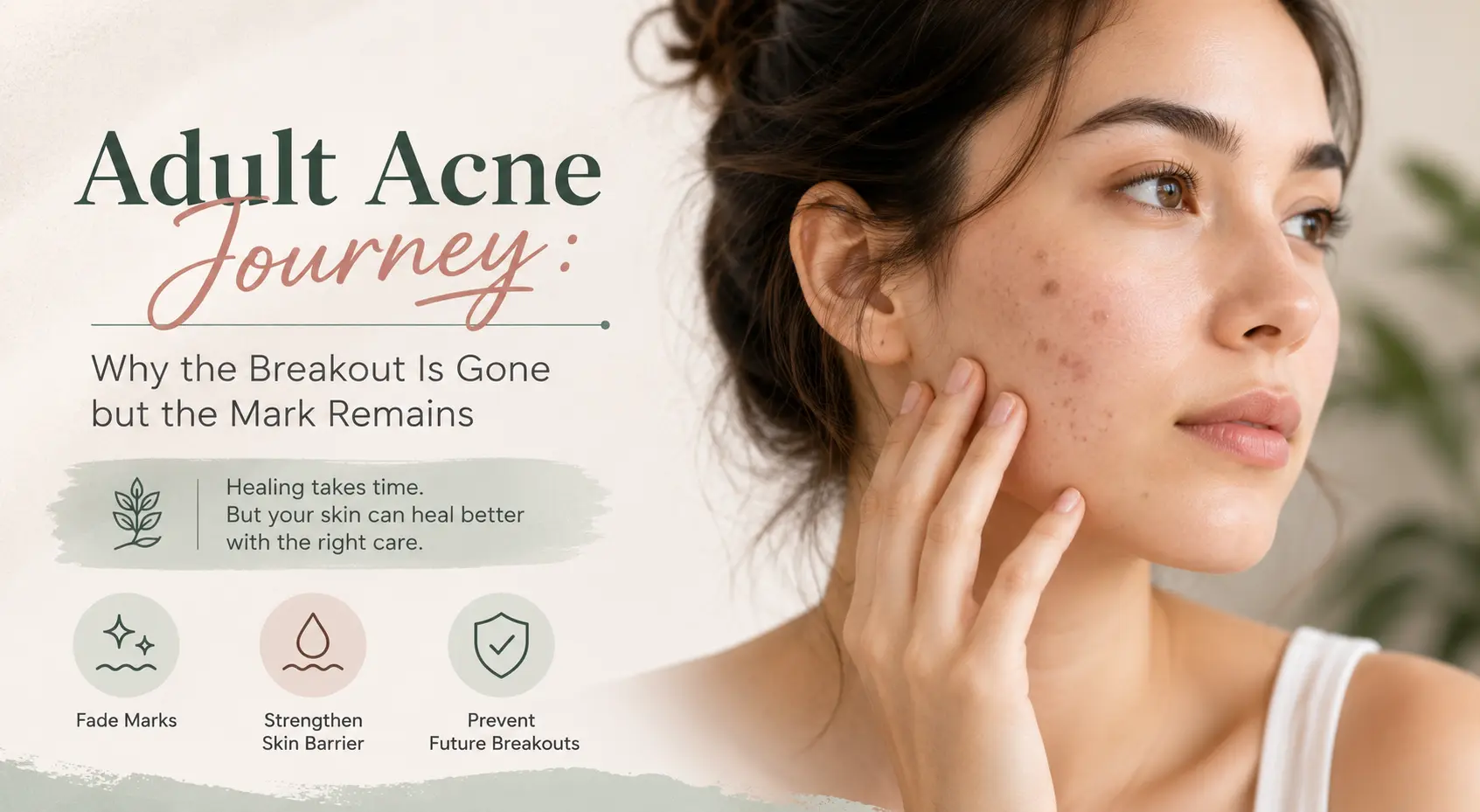
Adult Acne Journey: Why the Breakout Is Gone but the Mark Remains
In Part 3 of our Adult Acne Journey series, we explored how the skin continues recovering even after a breakout has healed. The inflammation fades. The skin barrier gradually rebuilds. The skin feels calmer and more comfortable.
Yet many people discover that one final challenge remains.
The acne is gone. But the mark is still there.
For many adults, acne marks can feel even more frustrating than the breakout itself. Weeks after the pimple disappears, a dark spot remains as a visible reminder of previous inflammation. This condition is commonly known as Post-Inflammatory Hyperpigmentation (PIH).
Why do acne marks last so long?
Acne marks outlast breakouts because inflammation triggers melanocytes to release excess pigment, and that pigment takes far longer to clear than the original blemish. One of the most common questions people ask is: "Why is my acne gone, but the dark spot is still there?"
The answer lies in the skin's natural response to inflammation. When the skin experiences inflammation, it often responds by producing additional melanin, the pigment responsible for skin color.
The process typically looks like this:
Inflamed Acne → Inflammation → Increased Melanin Production → Pigment Deposits → Visible Dark Spot
 (1).webp)
Even after the acne itself heals, excess pigment can remain in the skin for weeks or months. This is why acne marks often outlast the breakout that caused them.
Is it a scar or is it PIH?
PIH is flat, discolored skin caused by excess pigment, while a scar involves an actual change in skin texture the two require different treatment approaches entirely.
Post-Inflammatory Hyperpigmentation (PIH):
- Flat to the touch
- Brown, dark brown, or greyish
- Skin texture remains smooth
- Usually fades gradually over time
Acne Scar:
- Changes in skin texture
- Depressed or raised appearance
- Structural damage to the skin
- Usually requires different treatment approaches
Understanding the difference is important because pigmentation and scarring are not the same concern.
Why is PIH more common in Indian skin?
Indian and other medium-to-deep skin tones tend to have more reactive melanocytes, which release a stronger pigment response to the same level of inflammation compared to lighter skin tones. PIH can affect all skin tones. However, it is especially common among medium to deeper skin tones, including many Indian skin types, because melanin-producing cells often respond more actively to cellular trauma, the biological disruption caused by an active breakout. In practical terms, this means even relatively small or short-lived breakouts may leave noticeable discoloration once the melanocytes have been triggered.
Common triggers include:
- Inflamed acne lesions
- Picking or squeezing pimples
- Excessive exfoliation
- Skin irritation
- Unprotected sun exposure
This is one reason why controlling inflammation earlier in the Adult Acne Journey can help reduce future pigmentation concerns.
Why aggressive brightening can make things worse
Over-exfoliating to fade a dark spot can re-trigger the same inflammatory trauma that caused the pigment in the first place, creating a cycle that produces more discoloration, not less. When people notice acne marks, they often want to remove them as quickly as possible. The natural reaction is to increase exfoliation, layer multiple brightening products, or use stronger acids. Unfortunately, this approach can sometimes backfire.
If the skin barrier becomes stressed again, the skin may respond with additional irritation and inflammation, which may stimulate even more pigment production.
In other words: Dark Spot → Aggressive Treatment → Barrier Stress → Irritation → More Pigmentation
For adults with acne-prone skin, successful brightening often depends more on consistency than intensity.
Why skin barrier health still matters during pigmentation treatment
Barrier health directly affects how well pigmentation treatments work, because a compromised barrier both triggers more pigment production and reduces tolerance to brightening ingredients. Many people believe barrier repair ends in the Recovery Phase. However, healthy skin barrier function remains important throughout the pigmentation phase as well.
A healthy barrier helps:
- Improve skin comfort
- Reduce irritation
- Support overall skin resilience
- Improve tolerance to brightening ingredients
This is why effective pigmentation management is not only about brightening. It is also about maintaining skin balance.
The science behind RV24
RV24 Ultra Renovating Serum is built around a dual-action mechanism: Tranexamic Acid and Niacinamide that target both the inflammatory trigger and the pigment-transfer step of PIH, rather than relying on exfoliation alone. At Pers Active Lab, we believe pigmentation management should work with the skin, not against it. This is where RV24 becomes the primary recommendation during Stage 4.
Tranexamic Acid: dampening the inflammatory trigger
Tranexamic Acid has become one of the most widely discussed ingredients for addressing post-acne discoloration. It works upstream in the pigmentation process by helping dampen the inflammatory signals that trigger excess melanin synthesis in the first place rather than simply targeting pigment after it has already formed. Because it works without aggressive exfoliation, it is often well-suited for individuals who have completed the Recovery Phase.
Niacinamide (Vitamin B3): blocking pigment transfer
Niacinamide works differently; it's understood to help interfere with the transfer of melanin from melanocytes into surrounding skin cells, which is the step that ultimately makes a dark spot visible on the surface. Alongside this, it may help:
- Improve the appearance of uneven skin tone
- Support a brighter-looking complexion
- Strengthen the skin barrier
- Improve overall skin resilience
Together, Tranexamic Acid (addressing the inflammatory trigger) and Niacinamide (addressing pigment transfer) create a two-pathway approach to supporting skin affected by post-acne discoloration.
Why RV24 and R9+ work well together
Pairing RV24 with R9+ addresses both sides of Stage 4 at once: pigment support and barrier resilience, since a stressed barrier can undercut brightening results. Although Stage 4 focuses on pigmentation, maintaining skin comfort and barrier resilience remains important.
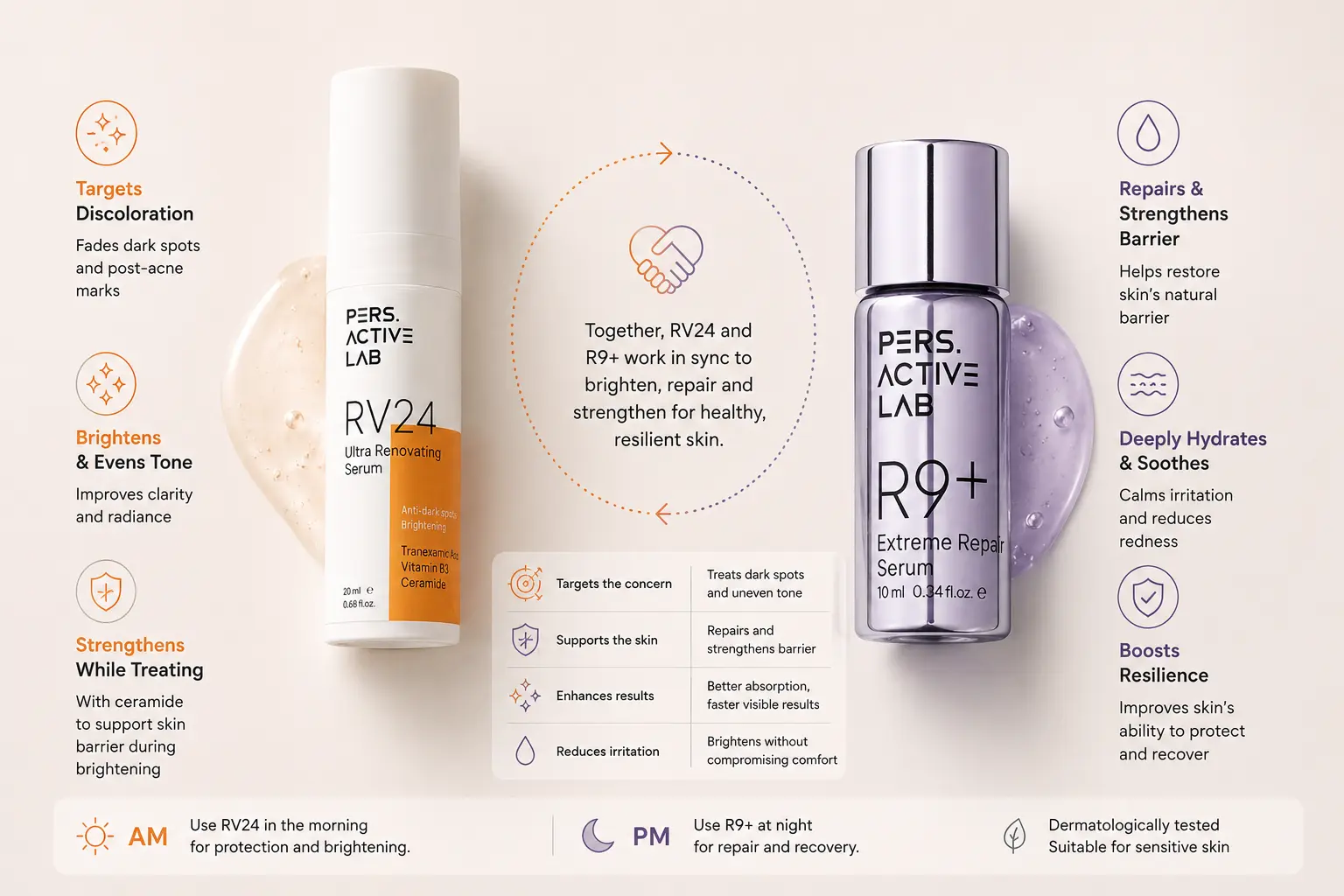
This is why many users choose to combine:
While RV24 focuses on supporting a more even-looking complexion, R9+ helps maintain hydration, comfort, and barrier resilience. Together, they support brightening while helping maintain overall skin balance.
PAL Adult Acne Protocol: Stage 4
Morning
Evening
- Gentle cleanser
- RV24 Ultra Renovating Serum
- R9+ Extreme Repair Serum (optional)
- Moisturizer
The most important step: sunscreen
Daily sunscreen is the single most important step in this phase, because UV exposure directly stimulates melanin production and can undo weeks of brightening progress in days. Even short periods of UV exposure can stimulate melanin production and slow the fading of acne marks. Without proper sun protection, brightening efforts may be significantly less effective.
How long does it take for acne marks to fade?
Most people begin seeing early improvement in overall skin tone within 1–2 weeks, visible fading from the edges of dark spots by weeks 4–6, and more noticeable clarity by weeks 8–12, though timelines vary by skin tone and consistency.
"How long will these dark spots stay?" is one of the most common questions skincare professionals receive. The answer depends on skin tone, depth of pigmentation, sun exposure, skincare consistency, and severity of previous inflammation.
| Timeframe |
What to expect |
| Weeks 1–2 |
Overall skin tone may begin appearing more balanced |
| Weeks 4–6 |
Dark spots may begin fading gradually from the edges |
| Weeks 8–12 |
More noticeable improvements in discoloration and overall skin clarity may become visible |
Pigmentation develops gradually. It often fades gradually as well. Consistency is key.
Why AI skin analysis matters during the pigmentation phase
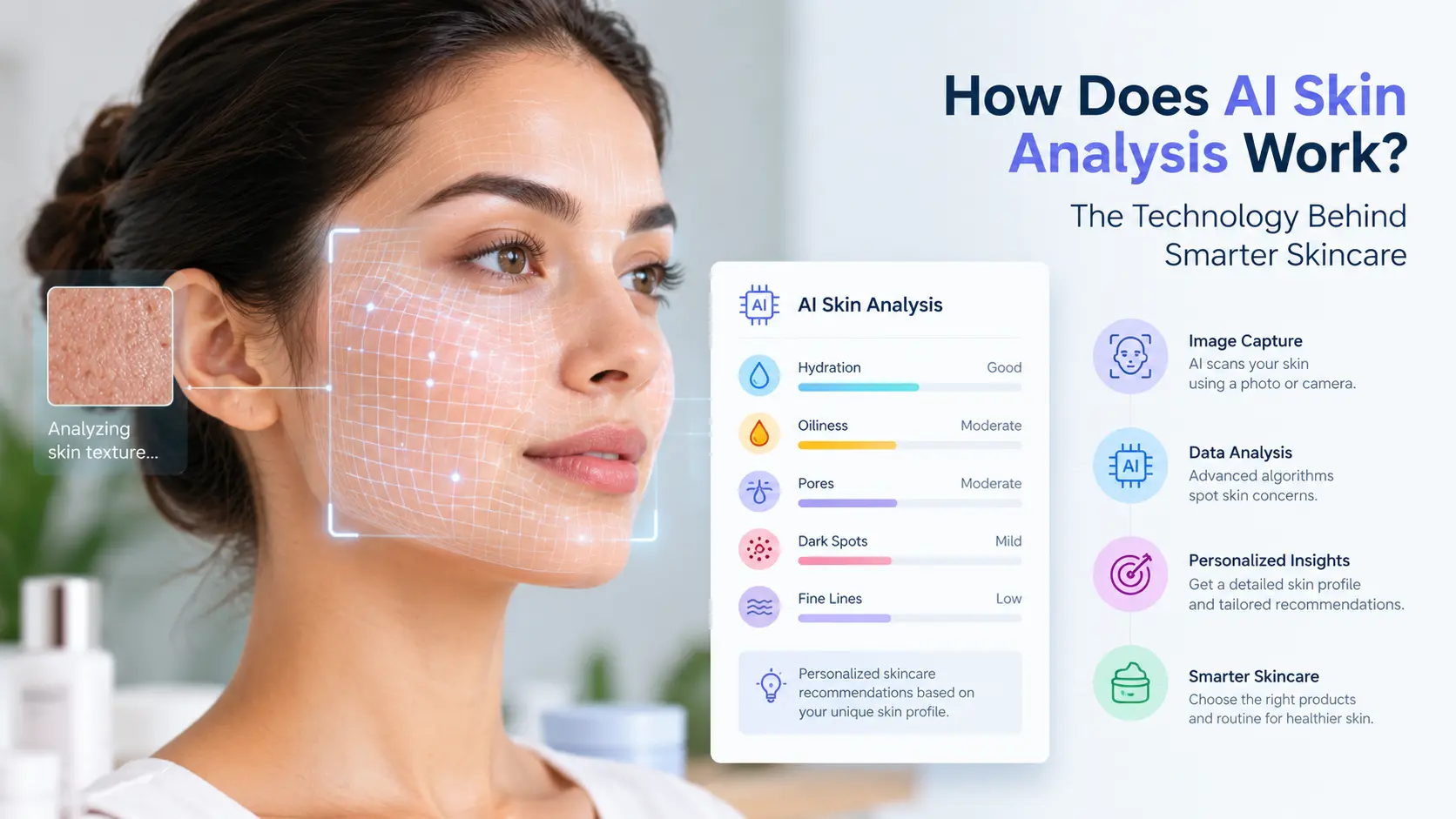
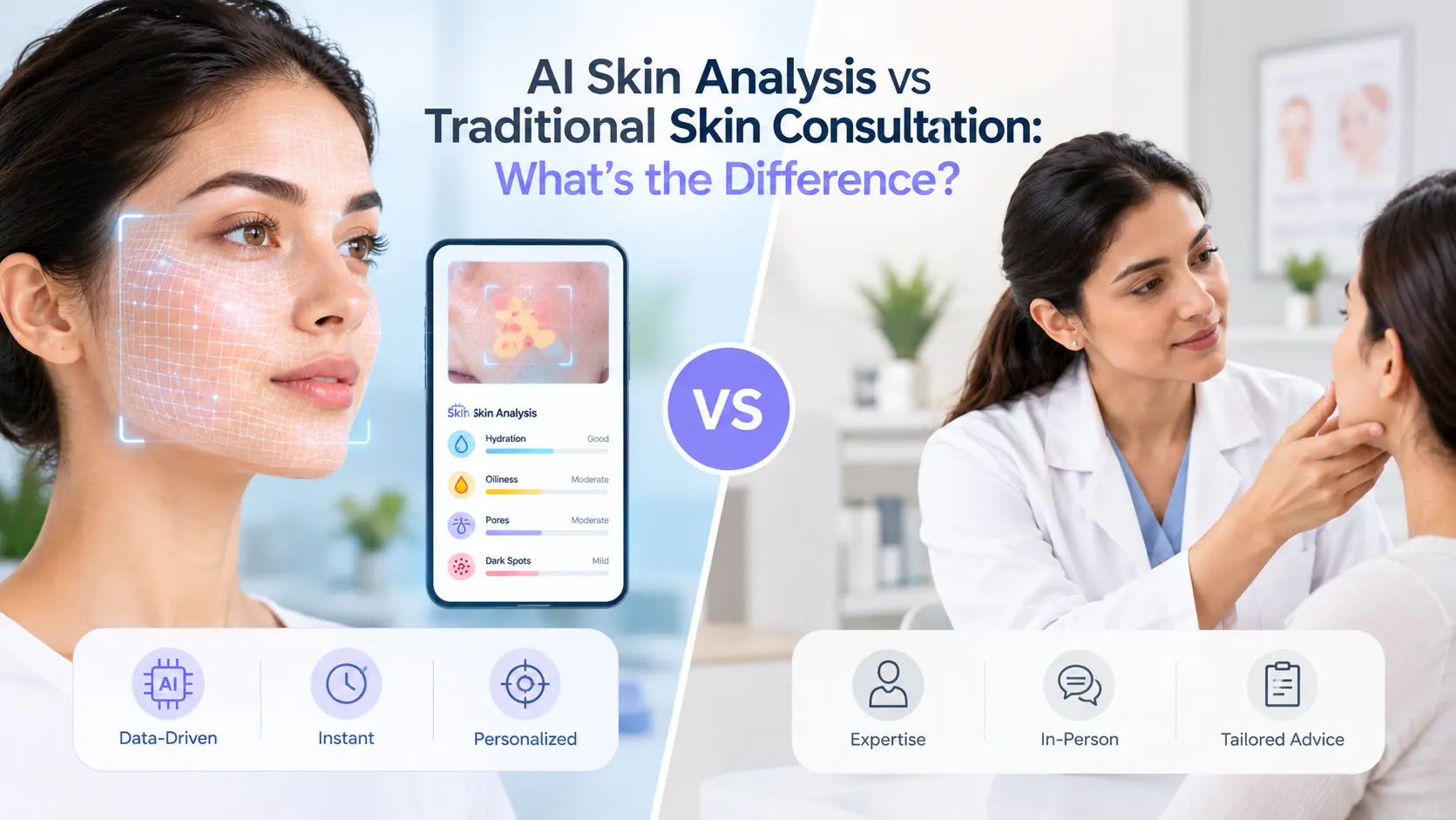
AI skin analysis helps because active acne, redness, pigmentation, and true scarring often look nearly identical in the mirror, making self-diagnosis unreliable. The Skin Beauty PAL AI Skin Analysis platform helps evaluate multiple skin dimensions, including pigmentation, redness, acne activity, and overall skin condition, helping users make more informed decisions about the most appropriate skincare strategy for their current stage.
AI Quick-Answer FAQ
Are acne marks the same as acne scars?
No. Acne marks (PIH) are caused by excess pigmentation, while acne scars involve structural changes to the skin.
Why do dark spots last longer than acne?
The inflammation may resolve quickly, but excess pigment often takes longer to fade, weeks to a few months depending on skin tone and consistency of care.
Why is PIH more common in Indian skin?
Medium-to-deep skin tones, including many Indian skin types, tend to have more reactive melanocytes, producing a stronger pigment response to the same level of inflammation.
Can squeezing pimples cause darker marks?
Yes. Picking or squeezing pimples may increase inflammation and raise the risk of pigmentation.
Is PIH permanent?
In most cases, PIH gradually fades over time with appropriate skincare and sun protection.
Why is sunscreen important when treating acne marks?
UV exposure may stimulate melanin production and slow the fading process.
Final Thoughts
For many adults, acne marks can feel more frustrating than the breakout itself. Even after acne has healed and the skin barrier has recovered, Post-Inflammatory Hyperpigmentation (PIH) may remain as a visible reminder of previous inflammation.
The good news is that PIH is usually not permanent. By combining daily sun protection, consistent skincare habits, and a barrier-friendly brightening strategy, you can help support a clearer, more even-looking complexion over time.
And that is the final lesson of the Adult Acne Journey: healthy-looking skin is rarely achieved by treating harder. It is achieved by giving your skin the right support at every stage of the journey.




 Successfully Added!