Acne rarely improves with a single "miracle" product. It improves when your skincare routine matches what your skin needs at different times of the day, and you can learn this by spending months trying strong actives twice a day and ending up with irritated, oilier skin. Once you separate morning protection from nighttime treatment, your breakouts become easier to manage, and your skin barrier recovers.
Current dermatology guidelines recommend using proven acne treatments while protecting the skin barrier. In this article, you'll learn how to build an effective morning and night skincare routine for acne-prone skin.
Your Acne Prone Skincare Routine Should Change Between Morning And Night
Morning and night have different goals. During the day, your skin is exposed to UV rays and excess oil. At night, your skin is not exposed to sunlight, sweat, or environmental pollutants. This makes nighttime a practical time to use certain acne treatments, particularly retinoids.
Many people use the same products twice a day without considering how these environmental changes affect the skin. That often leads to dryness or persistent breakouts.
The table below explains the difference. Morning vs Night: What Your Skin Needs
|
Time
|
Main Goal
|
Best Ingredients
|
What to Avoid
|
|
Morning
|
Protect skin and control oil
|
Gentle cleanser, SPF 30+ sunscreen
|
Overusing of exfoliating acids unless advised by your dermatologist
|
|
Night
|
Treat acne and support skin repair
|
Retinoids, ceramide moisturizer
|
Using multiple strong actives together
|
Following this structure keeps your skin barrier healthy while allowing acne treatments to work consistently.
Step-By-Step Morning Skincare For Acne
The morning routine should stay simple. Every extra product increases the chance of irritation without adding much benefit.
Step 1: Wash Away Overnight Oil
Choose a gentle cleanser that removes excess sebum without leaving your skin tight.
For oily skin, a cleanser containing 0.5–2% salicylic acid keeps pores clear. But if your skin becomes dry easily, use a sulfate-free cleanser instead. Dermatologists generally recommend gentle cleansers over harsh foaming washes.
Step 2: Use a Targeted Serum
Instead of applying multiple serums, focus on one ingredient that addresses your main concern. For acne-prone skin, good options include:
- Niacinamide (4–5%) to reduce oil production and redness
- Azelaic acid for acne marks and inflammation
- Green tea extract for antioxidant protection
Moderate concentrations often deliver effective results with a lower risk of irritation.
Step 3: Never Skip Moisturizer
Many people with acne avoid moisturizer because they think it causes pimples. In reality, dehydrated skin can produce even more oil. Choose a lightweight moisturizer containing:
- Ceramides
- Glycerin
- Hyaluronic acid
Avoid heavy fragrances if your skin becomes irritated easily.
Step 4: Sunscreen Is Non-Negotiable
Daily sunscreen can help prevent post-acne marks from becoming darker and may support more even fading over time. Without sunscreen, UV exposure keeps inflammation active and slows fading of pigmentation.
Choose:
- SPF 30 or higher
- Broad-spectrum protection
- Non-comedogenic formula
- Gel or fluid texture for oily skin
The American Academy of Dermatology recommends daily sunscreen, especially with retinoids or exfoliating acids.
Common Morning Mistakes That Make Acne Worse
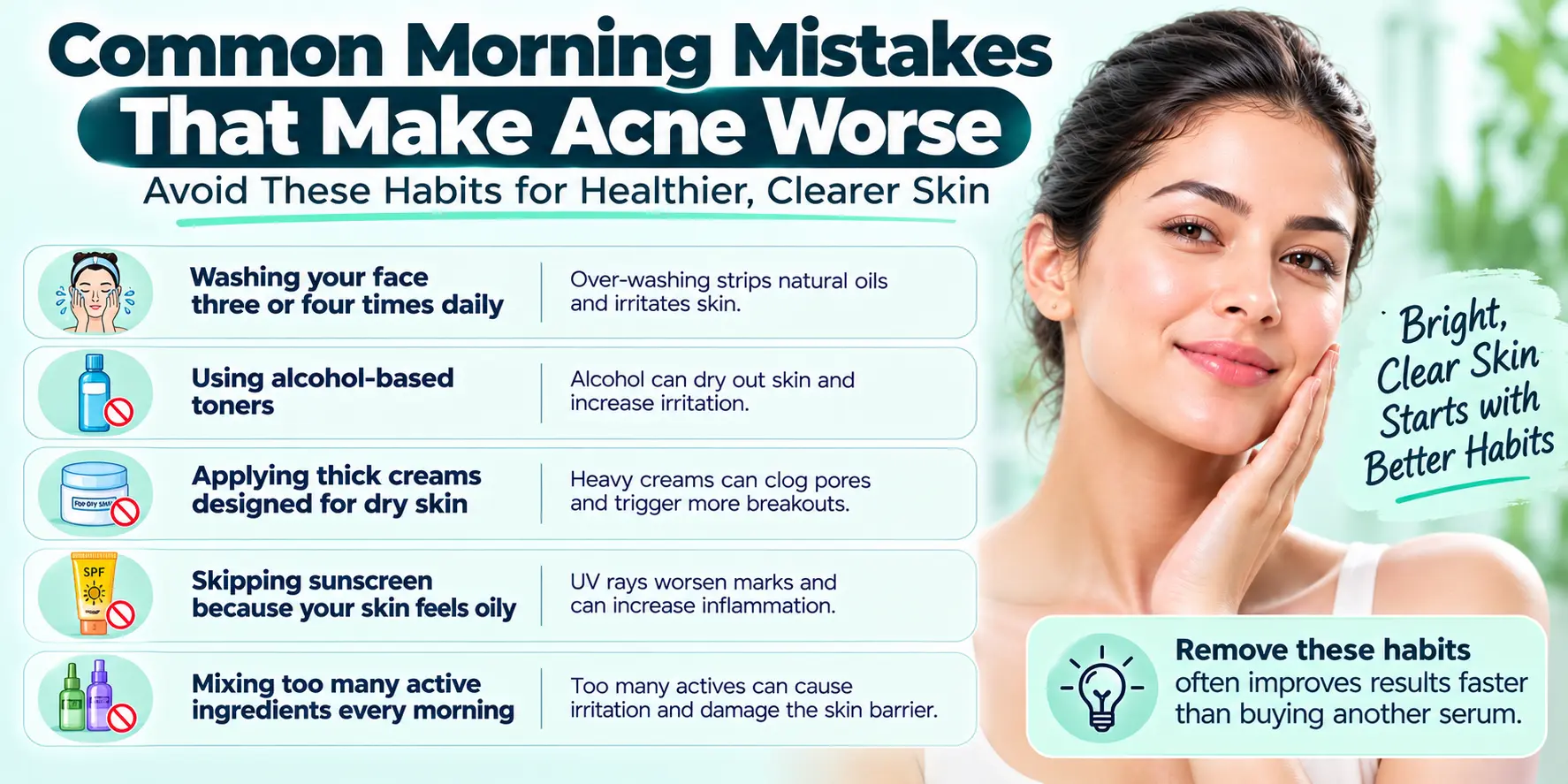
These habits may increase dryness, irritation, or treatment-related sensitivity.
- Washing your face three or four times daily
- Using alcohol-based toners
- Applying thick creams designed for dry skin
- Skipping sunscreen because your skin feels oily
- Mixing too many active ingredients every morning
Removing these habits often improves results faster than buying another serum.
What Recent Research Shows
NICE Acne Vulgaris guideline continues to recommend consistent topical therapy and protecting the skin barrier as part of effective acne management. The update encourages consistent combination topical treatments.
This aligns with what many dermatologists observe in practice: consistency usually matters more than using the most products.
Build a Routine You Can Actually Follow
The best acne-prone skincare routine is not the longest one. It is the one you can follow every day without irritating your skin.
A simple morning routine should include:
- Gentle cleanser
- One targeted treatment serum
- Lightweight moisturizer
- Broad-spectrum sunscreen
Keeping these four steps consistent gives your skin the protection it needs before your evening treatment routine begins.
Step-By-Step Night Acne Routine
Night is when you should focus on treatment, not protection. Your skin is free from sun exposure. This makes it the right time to use active ingredients that target acne.
Skin usually needs 8–12 weeks to show visible improvement with topical acne treatments.
Step 1: Remove Dirt and Sunscreen
Even if you do not wear makeup, sweat and pollution come during the day. Use a gentle cleanser that removes these without leaving your skin dry.
Use a cleansing balm or micellar water before your regular cleanser if you wear sunscreen or makeup. Avoid scrubbing your face. Acne is an inflammatory condition, and excessive friction can increase redness.
Step 2: Apply Your Treatment Product
This is the most important step in your acne-prone skincare routine. Choose only one active ingredient unless your dermatologist recommends combining treatments.
Here are some of the most effective options.
|
Ingredient
|
Best For
|
How Often
|
|
Adapalene 0.1%
|
Whiteheads, blackheads and recurring acne
|
Every other night initially
|
|
Benzoyl Peroxide (2.5–5%)
|
Inflamed pimples and acne-causing bacteria
|
2–3 nights per week
|
|
Azelaic Acid (10–20%)
|
Acne marks, redness and mild acne
|
Daily if tolerated
|
|
Salicylic Acid (0.5–2%)
|
Oily skin and clogged pores
|
2–3 nights weekly
|
Start slowly. Using too many active ingredients together often leads to irritation instead of faster results.
Step 3: Lock in Moisture
Treatment products can dry the skin. Finish with a fragrance-free moisturizer containing:
- Ceramides
- Cholesterol
- Fatty acids
- Glycerin
These ingredients help restore the skin barrier, reducing dryness without clogging pores.
Many users report that pairing acne treatments with a lightweight barrier-supporting moisturizer makes it easier to stay consistent with their routine because the skin feels less irritated.
A Simple Weekly Schedule
Following a fixed schedule reduces the temptation to keep changing products.
|
Day
|
Treatment
|
|
Monday
|
Adapalene
|
|
Tuesday
|
Moisturizer only
|
|
Wednesday
|
Benzoyl Peroxide
|
|
Thursday
|
Moisturizer only
|
|
Friday
|
Adapalene
|
|
Saturday
|
Azelaic Acid
|
|
Sunday
|
Barrier repair with moisturizer only
|
This is only an example. Your dermatologist may recommend a different schedule depending on your skin.
Ingredients That Should Not Be Used Together
Combining strong treatments can damage your skin barrier. So, avoid these combinations unless advised by a dermatologist.
- Retinoids with strong exfoliating acids on the same night
- Multiple exfoliating acids together
- High-strength benzoyl peroxide with retinoids unless your treatment plan specifically combines them
- Physical scrubs with chemical exfoliants
Using fewer products consistently usually gives better long-term results.
What the Latest Research Says
Recent global research shows that acne remains a common skin condition and that its burden has increased in many populations, particularly among adolescents and young adults. This makes it one of the most common skin conditions across adolescents and young adults. The data also highlights the importance of early and consistent acne treatment.
How Long Does It Take to See Results?
Most evidence-based topical treatments do not work overnight. You can generally expect:
- 2–4 weeks: Less oil and fewer new breakouts.
- 6–8 weeks: Noticeable improvement in inflammatory acne.
- 8–12 weeks: Better control of recurring acne and gradual fading of acne marks.
Switching products every two weeks makes it difficult to know what is actually working. Take a photo every month under the same lighting instead of checking your skin every day.
Conclusion
A successful acne prone skincare routine is built on consistency rather than the number of products you use. Your morning routine should focus on cleansing and sun protection, while your evening routine should target acne with proven ingredients, support the skin barrier, and give each treatment enough time before deciding whether it is working.
When choosing products, focus on evidence-backed ingredients instead of trends. Pers. Active Lab Powered by Skin Beauty Pal (SBP) offers skincare solutions that support a simple, consistent acne routine.
Frequently Asked Questions
1. Can I use salicylic acid every day if I have acne-prone skin?
It depends on your skin's tolerance. Many people can use low-strength salicylic acid daily. But if you notice dryness or irritation, reduce it to two or three times a week.
2. Should I moisturize even if my skin is oily?
Yes. Skipping moisturizer can weaken your skin barrier and increase oil production so, choose a lightweight, non-comedogenic moisturizer.
3. Is it safe to use adapalene and benzoyl peroxide together?
Some treatment plans combine them. But they should only be used together if recommended by your dermatologist or if you are using a clinically formulated combination product.
4. How do I choose the right acne products for my skin?
Look for products labelled as non-comedogenic and choose ingredients based on your concern. Salicylic acid unclogs pores, while azelaic acid reduces acne marks and redness. Add one product at a time.


 Member Center







 Successfully Added!