In Part 2 of our Adult Acne Journey series, we explored how active breakouts develop and why aggressive acne treatments can sometimes make the problem worse.
But what happens after the breakout finally disappears?
For many adults, this is where another hidden challenge begins. The redness fades, the swelling subsides, the pimple flattens, yet the skin still feels sensitive, dry, reactive, or uncomfortable. This stage is often overlooked, but it plays a critical role in long-term skin health.
Welcome to the Post-Breakout Recovery Phase.
|
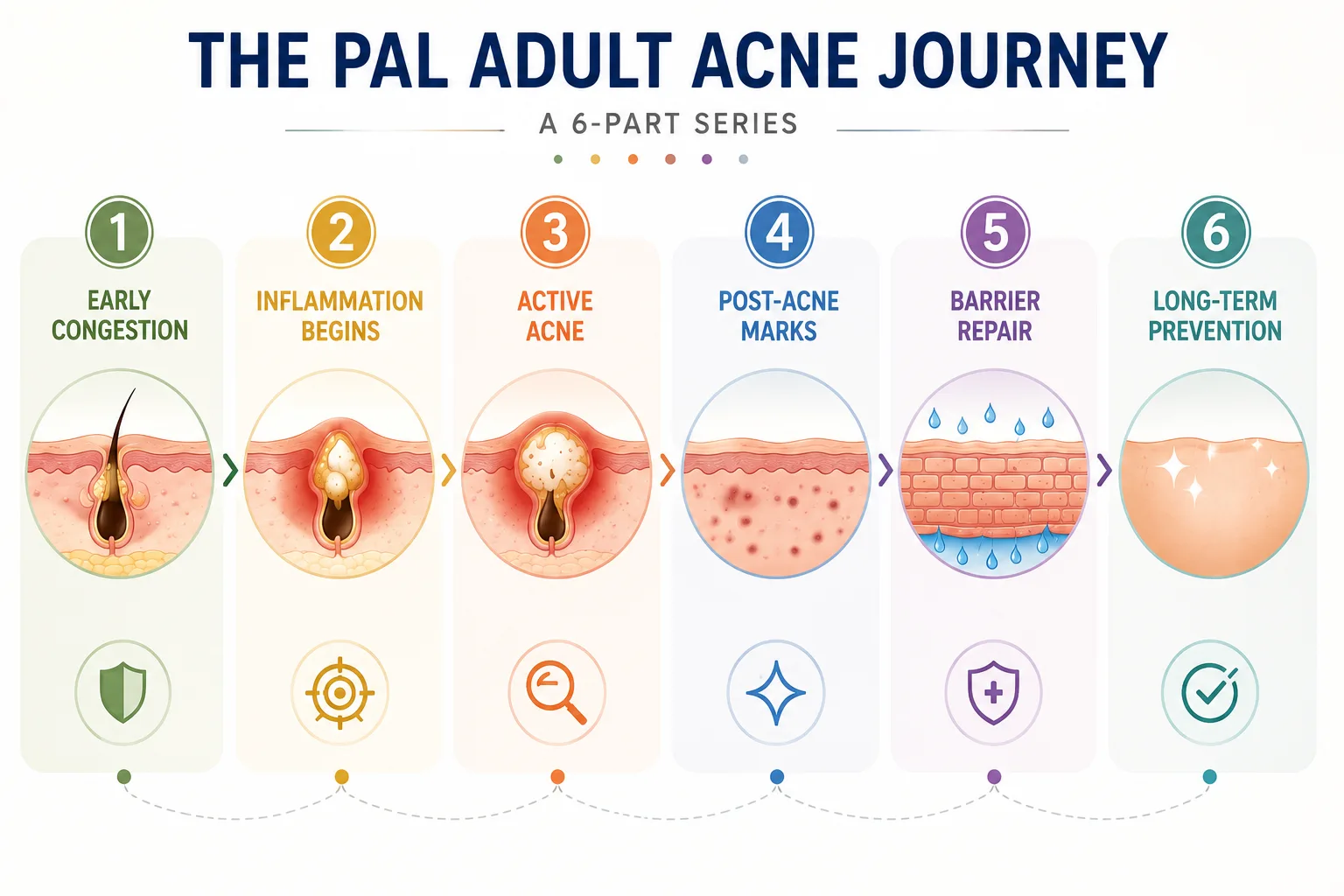
About This Series
This article is Part 3 of the PAL Adult Acne Journey series, published every Wednesday. Each part explores a distinct stage of how adult acne develops and what you can do at each stage to support healthier-looking skin.
|
Why Does Skin Still Feel Sensitive After a Breakout Heals?
Skin remains sensitive after a breakout because the visible pimple can resolve weeks before the underlying tissue finishes repairing itself. During active inflammation, the skin experiences significant biological stress. Even after the acne flattens, the surrounding skin may still be rebuilding.
This is why many adults notice:
- Tightness after cleansing
- Increased redness
- Dryness or flaking
- Product sensitivity
- Skin that feels both oily and fragile
Although these symptoms may not look like acne, they are often part of the recovery process.
What Is Post-Breakout Sensitivity?
Post-Breakout Sensitivity is the recovery window after visible inflammation has subsided but before the skin barrier has fully rebuilt itself. The skin may appear calm on the surface, but beneath it, repair processes are still underway.
During this phase, the skin may experience:
- Increased moisture loss
- Temporary redness
- Heightened sensitivity
- Reduced tolerance to active ingredients
- Slower recovery from environmental stress
This is one reason why products that normally feel comfortable may suddenly sting or irritate the skin after a breakout.
What Happens to Your Skin Barrier After an Acne Breakout Heals?
After a breakout, the skin barrier is often left temporarily weakened, even though the acne itself is gone, reducing its ability to retain moisture and defend against irritants. The skin barrier is the outermost protective layer of the skin. Its role is to:
- Retain moisture
- Protect against pollution
- Defend against irritants
- Support skin resilience
- Maintain overall skin balance
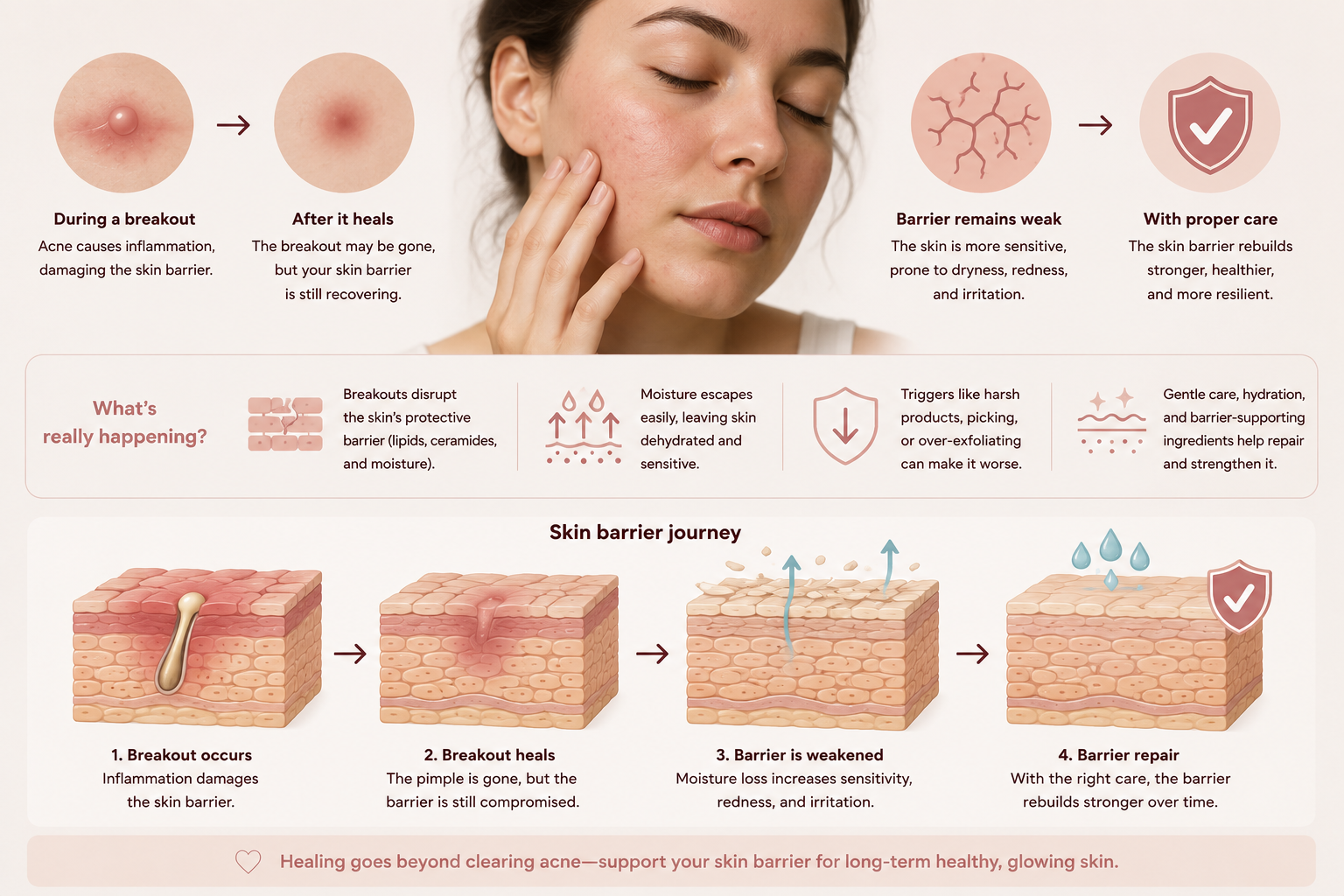
When the barrier is healthy, skin feels comfortable, balanced, and resilient. When it's weakened after inflammation, skin may struggle to maintain hydration and defend itself effectively.
Common signs of a weakened skin barrier include:
- Tightness after washing
- Dry patches
- Persistent redness
- Product sensitivity
- Uneven skin texture
- Skin that feels both oily and sensitive
Many adults mistake these symptoms for ongoing acne and continue using aggressive acne treatments, which often delay recovery.
Why Does Using Active Ingredients Too Soon After a Breakout Cause Irritation?
Using strong actives too early re-injures a barrier that hasn't finished repairing itself, which is why the same products that once worked can suddenly cause stinging or redness. One of the most common mistakes during recovery is continuing to treat the skin as though the breakout is still active.
Many people continue using:
- Strong exfoliating acids
- Retinoids
- Multiple acne treatments
- Harsh cleansers
While these ingredients can be effective in certain situations, introducing them too soon can overwhelm skin that is still recovering. This may result in:
- Persistent redness
- Ongoing sensitivity
- Increased dehydration
- Slower recovery
- Greater likelihood of future breakouts
At this stage, the goal should shift from fighting acne to rebuilding the skin barrier.
Why R9+ Becomes the Priority During Recovery
During the Recovery Phase, barrier-repair ingredients — not acne-fighting actives — should be the priority, which is why R9+ Extreme Repair Serum becomes the primary recommendation. At Pers Active Lab, we believe the recovery phase is one of the most important stages of the Adult Acne Journey. Rather than focusing on correction, the priority should be helping the skin restore its natural defenses.
This is where R9+ Extreme Repair Serum (formulated with Panthenol/Vitamin B5 and fermented yeast lysates) works to support cellular turnover and lipid synthesis mechanisms associated with barrier recovery. Its role is to support:
Skin Barrier Recovery: A stronger barrier helps reduce moisture loss and improve skin resilience.
Skin Comfort: Supporting hydration and skin balance can help reduce feelings of tightness and discomfort.
Recovery From Visible Skin Stress: Even after inflammation subsides, residual stress may remain beneath the surface.
Long-Term Skin Resilience: A healthier barrier is often better equipped to tolerate pollution, UV exposure, and everyday environmental stressors.
Where Does PR13 Fit Into Recovery?
PR13 Pore Tightening Serum plays a secondary, not primary, role during recovery — it should only be reintroduced once the skin is calmer and less reactive. Many people assume pore care should stop completely during recovery. However, for individuals with oily skin or recurring congestion, maintaining pore health remains important.
PR13 Pore Tightening Serum (formulated with [insert PR13 active ingredients e.g., niacinamide, salicylic acid, zinc PCA]) works to [insert mechanism, e.g., regulate sebum production and support pore appearance] mechanisms associated with pore maintenance.
Unlike the Active Breakout Phase, PR13 should not be the focus during recovery. Instead, it can be introduced gradually and strategically once the skin becomes more comfortable and less reactive. Its purpose during recovery is:
- Gentle pore maintenance
- Oil management
- Prevention of recurring congestion
For most individuals, barrier repair should remain the primary goal, while pore care serves as a secondary objective.
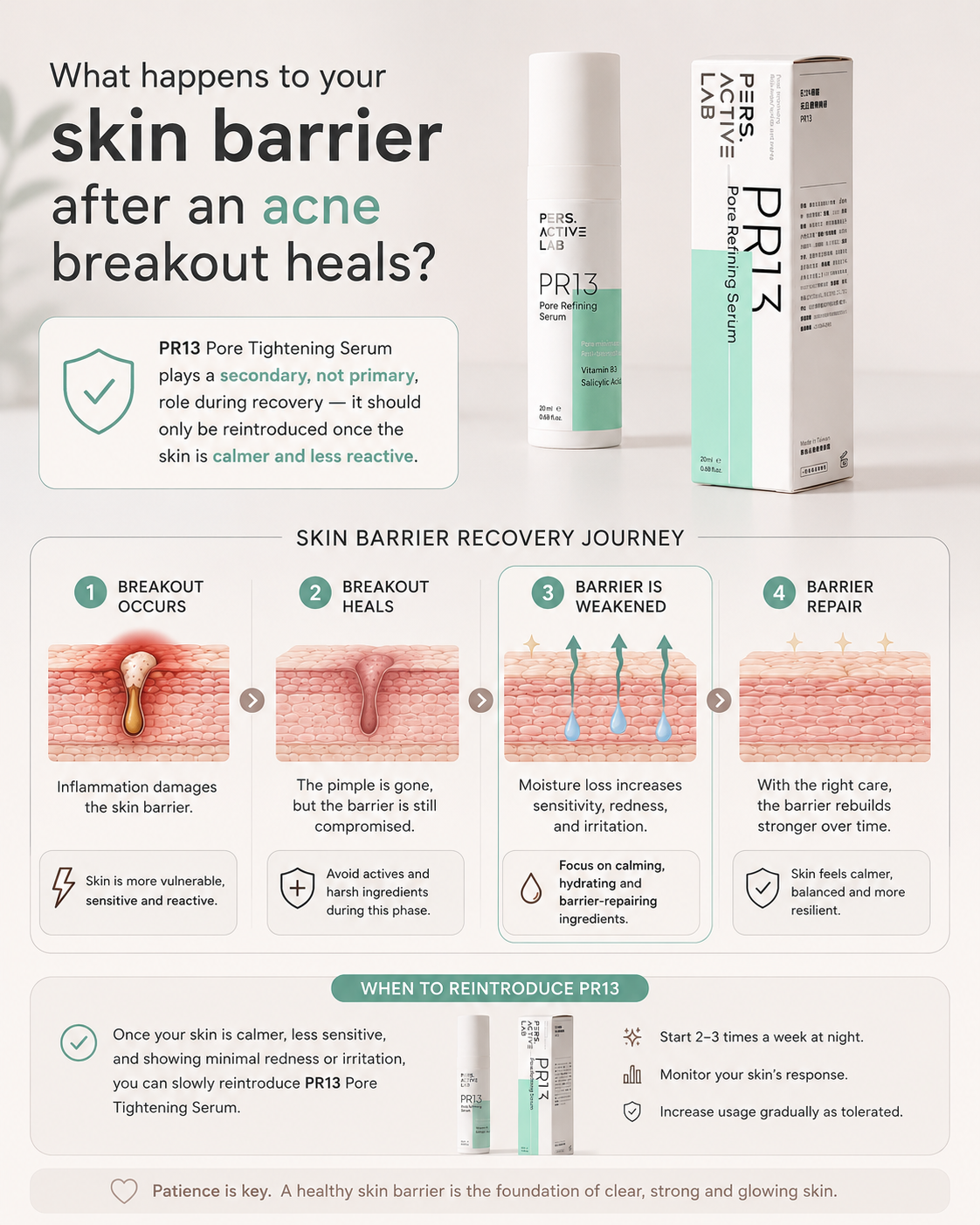
PAL Adult Acne Protocol: Stage 3
Weeks 1–2: Barrier Recovery
Focus entirely on recovery.
Morning
Evening
Avoid introducing new active ingredients during this period.
Weeks 3–4: Controlled Reintroduction
Once the skin no longer feels tight, dry, or reactive:
Morning
Evening
This gradual approach helps reduce the likelihood of triggering another breakout cycle.
How Do You Know Your Skin Has Recovered?
Skin has recovered when it feels comfortable throughout the day, tolerates products without stinging, and only post-acne marks remain — no active tightness or redness. Your skin is likely ready for the next phase when:
- Tightness has improved
- Dryness is minimal
- Products no longer sting
- Redness has largely subsided
- Skin feels comfortable throughout the day
- Only post-acne marks remain
These signs suggest the skin barrier has regained much of its strength and resilience.
Why AI Skin Analysis Matters During Recovery
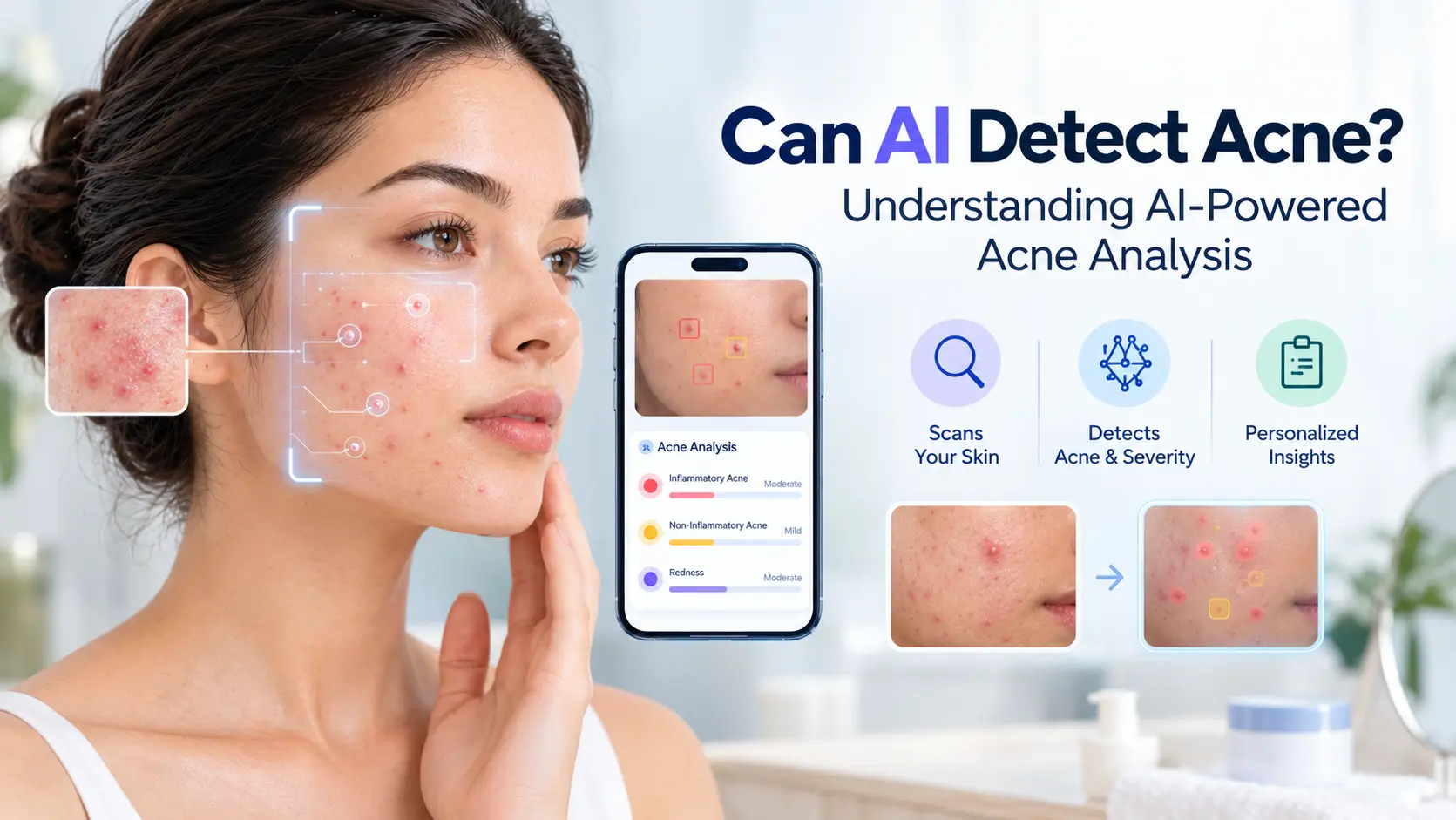
AI skin analysis helps because most people can't reliably tell, on their own, whether their skin is still inflamed or genuinely ready for the next treatment phase. This often leads to introducing strong treatments too early. The Skin Beauty PAL AI Skin Analysis platform helps evaluate multiple dimensions of skin health, including redness, sensitivity, pigmentation, and overall skin condition, allowing users to make more informed decisions about when to focus on recovery and when to progress to the next stage of treatment.
FAQs
Why does my skin still sting after acne is gone?
The visible acne may be gone, but the skin barrier may still be recovering from inflammation.
How long does the post-breakout sensitivity phase typically last?
Recovery timelines vary, but many people notice improved comfort and tolerance within roughly 1–2 weeks, depending on how the skin was treated and how it responds to barrier-support ingredients like R9+.
Can I use salicylic acid or other exfoliating acids immediately after a pimple flattens?
It's generally advisable to pause aggressive chemical exfoliants for at least a week or two, allowing the barrier to stabilize before reintroducing them.
Should I continue using strong acne products after my breakout disappears?
Not always. Continuing aggressive treatments during recovery may increase sensitivity and delay healing.
Why does my skin feel oily and dry at the same time?
A weakened skin barrier may cause increased moisture loss while oil production continues.
When should I start using pore-care products again?
Once the skin feels comfortable, less reactive, and no longer experiences significant tightness or irritation.
Is barrier repair important even if I don't have sensitive skin?
Yes. Healthy skin barrier function supports long-term skin resilience and may help reduce future skin concerns.
Final Thoughts
The disappearance of a pimple does not necessarily mean your skin has fully recovered. For many adults, the weeks following a breakout represent a hidden recovery phase where the skin barrier is still rebuilding itself.
Instead of rushing back to strong treatments, focus on supporting recovery through barrier repair and consistent skincare habits. By prioritizing R9+ during this stage and introducing PR13 only when appropriate, you can help support skin resilience, improve comfort, and reduce the likelihood of future acne cycles.
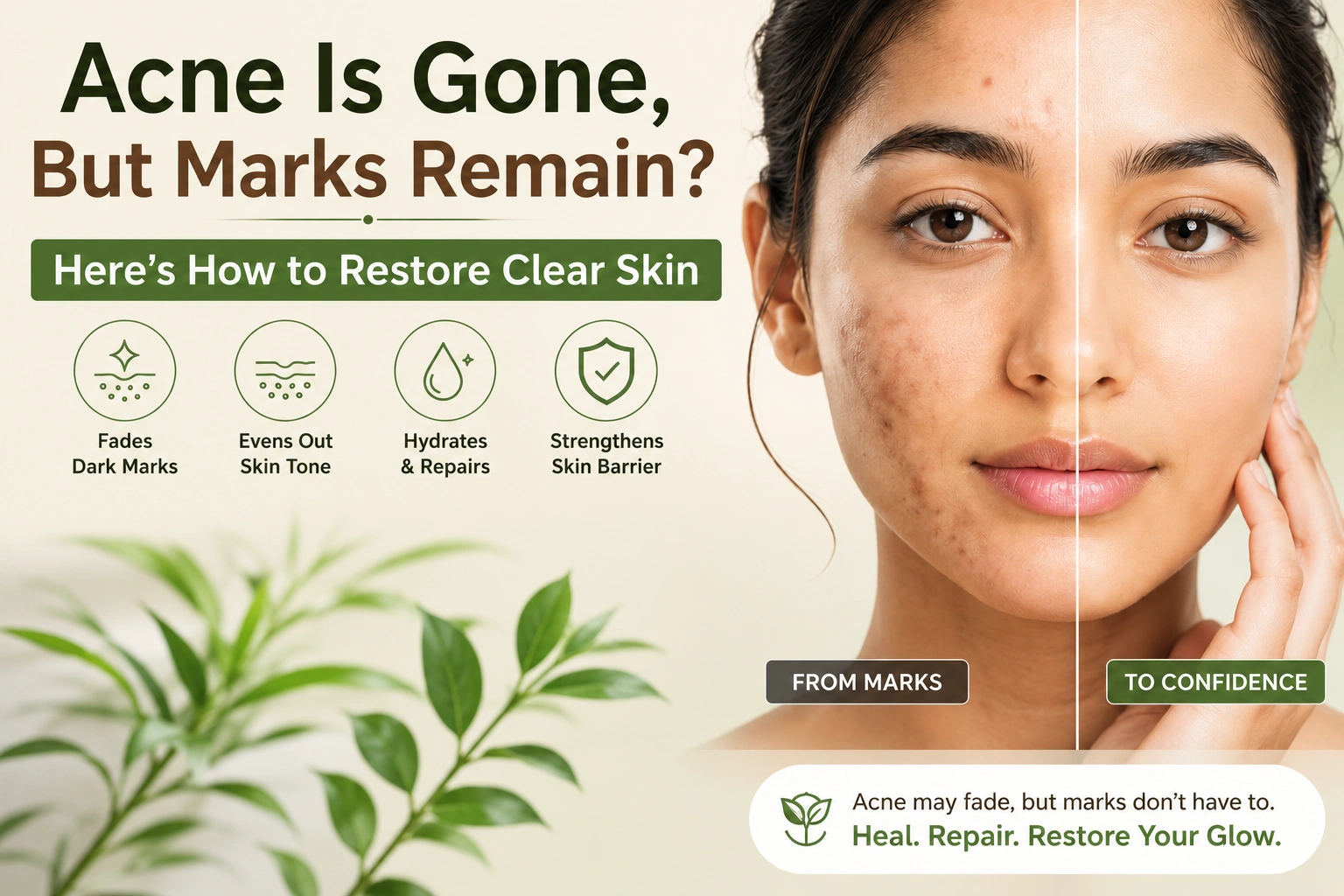
In Part 4 of the Adult Acne Journey series, we'll explore why acne marks often remain long after a breakout has healed and what you can do to support a brighter, more even-looking complexion.




 Successfully Added!