Adult Acne Journey: Why Adult Acne Keeps Coming Back
In Part 1 of our Adult Acne Journey series, we explored how acne often begins during the hidden stage of Early Congestion, when excess oil, dead skin cells, and clogged pores gradually build up beneath the skin.
But what happens when a clogged pore becomes a painful, red, inflamed breakout?
For many adults, this is the most frustrating stage of the acne journey.
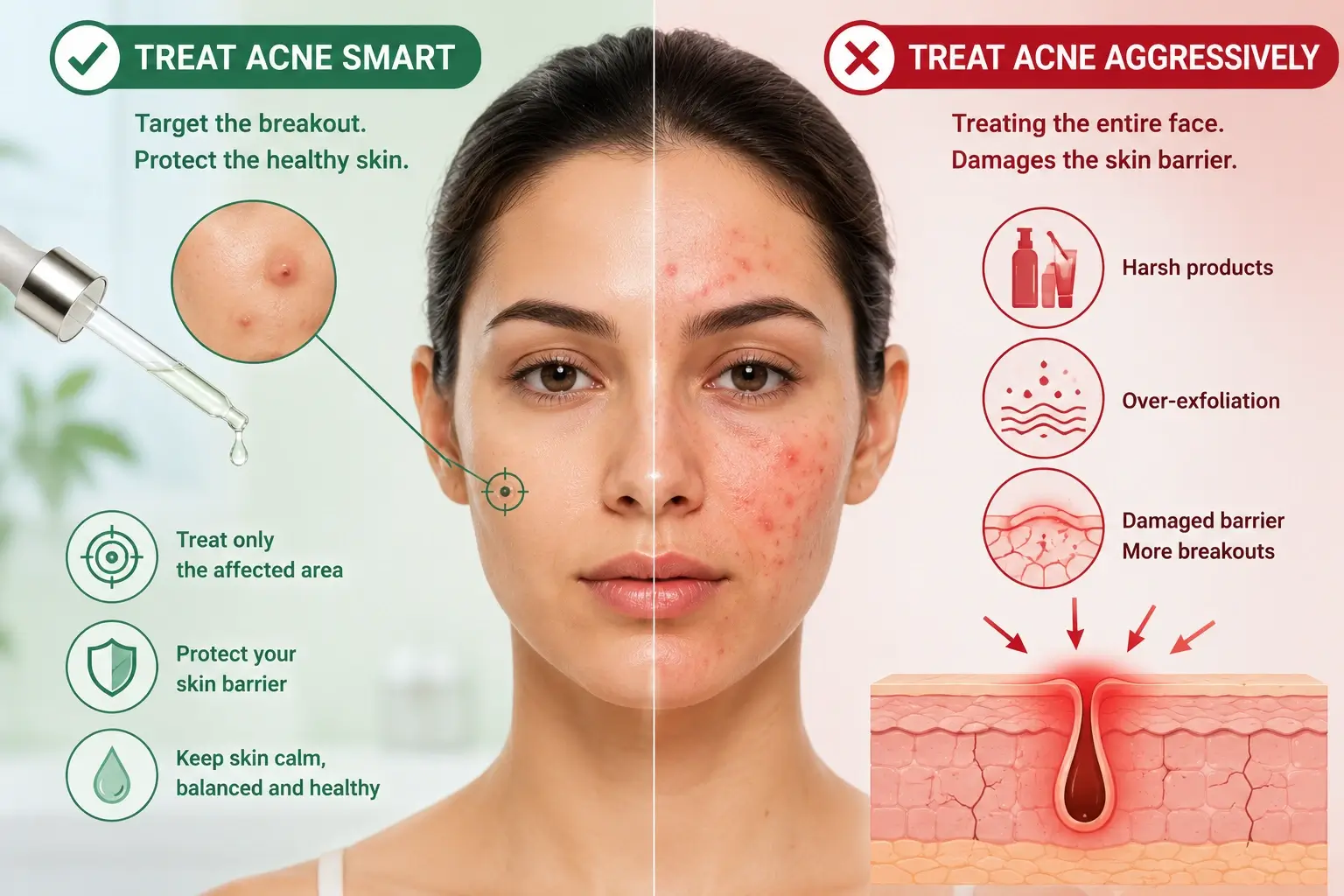
The breakout appears suddenly before an important meeting, social event, or busy work week. The natural reaction is often to fight back aggressively with stronger cleansers, harsher exfoliants, and multiple acne products.
Unfortunately, this approach often creates a new problem.
Instead of helping the skin recover, it may increase irritation, disrupt the skin barrier, and contribute to recurring breakouts.
This is why successful adult acne management requires precision rather than aggression.
Why Does Adult Acne Keep Coming Back?
One of the most common questions adults ask is:
"Why do my pimples keep coming back even though I'm using acne products?"
The answer is often more complicated than excess oil alone.
Many adults successfully reduce visible breakouts temporarily, only to experience another flare-up a few weeks later.
This recurring cycle often involves multiple factors:
- Persistent pore congestion
- Ongoing inflammation
- Environmental stress
- Hormonal fluctuations
- Skin barrier disruption
While clogged pores may trigger the breakout, inflammation often determines how severe the breakout becomes and how long it takes to heal.
This is why successful adult acne management requires more than simply drying out pimples. It requires understanding what is happening beneath the surface of the skin.
What Happens During an Active Breakout?
An active breakout develops when a clogged pore becomes inflamed.
The process typically looks like this:
Excess Oil + Dead Skin Cells
↓
Pore Blockage
↓
Bacterial Overgrowth
↓
Inflammation
↓
Visible Acne
Once a pore becomes blocked, acne-causing bacteria can multiply inside the follicle.
Your body's immune system responds by sending inflammatory cells to the area.
This creates the symptoms commonly associated with active acne:
- Redness
- Swelling
- Tenderness
- Pain
- Warmth around the blemish
In simple terms, that red bump is evidence that your body is actively responding to a localized skin concern.
The Adult Acne Trap: When Treatment Becomes Part of the Problem
Many adults continue using the same acne strategies they relied on as teenagers.
When a breakout appears, they often:
- Over-cleanse
- Over-exfoliate
- Layer multiple acne treatments
- Use strong acids across the entire face
While these approaches may temporarily reduce oiliness, they can also place significant stress on the skin barrier.
Over time, a weakened skin barrier may contribute to:
- Increased sensitivity
- More redness
- Dehydration
- Slower recovery
- Greater susceptibility to irritation
This creates a frustrating cycle:
Breakout
↓
Aggressive Treatment
↓
Barrier Stress
↓
Increased Sensitivity
↓
More Inflammation
↓
More Breakouts
For many adults, recurring acne is not simply a pore problem.
It is often a combination of inflammation and skin barrier stress occurring at the same time.
Why Is My Skin Both Oily and Sensitive?
Many adults find themselves dealing with what appears to be a contradiction.
Their skin feels oily, yet it also stings, becomes irritated easily, or reacts to products that previously felt comfortable.
This often happens because excess oil production and skin barrier stress can exist simultaneously.
When the skin barrier becomes less resilient, it may struggle to maintain moisture and defend against environmental stressors.
At the same time, the skin may continue producing excess oil.
This is why many adults experience both acne and sensitivity together.
Understanding this relationship is one of the most important steps toward managing adult acne more effectively.
The Tactical Local Strike Strategy
At Pers Active Lab, we recommend what can be described as a Tactical Local Strike Strategy.
Instead of treating your entire face like one giant breakout, focus treatment on the affected area while protecting the health of surrounding skin.
Think of it this way:
If one room in a building catches fire, firefighters focus on the source of the fire while protecting the rest of the structure.
The same principle applies to acne care.
This targeted approach delivers two important benefits:
Maximum Effectiveness
Active ingredients are concentrated where they are needed most.
Better Skin Barrier Protection
Healthy areas remain hydrated, balanced, and resilient, reducing the risk of unnecessary irritation.
This strategy is particularly important for adults with oily yet sensitive skin.
When to Use BD14: Managing Inflamed Breakouts
Not every acne product serves the same purpose.
When a breakout is visibly red, swollen, painful, and inflamed, the primary objective should be reducing visible inflammation.
This is where BD14 Ultra Blemish Defense Serum becomes particularly useful.
BD14 is designed to support the skin during the Active Breakout Phase by helping calm visible redness and skin discomfort associated with inflamed blemishes.
Signs BD14 May Be the Better Choice
- Bright red pimples
- Painful breakouts
- Swollen acne lesions
- Localized skin sensitivity
- Recurrent inflammatory acne
At this stage, helping calm inflammation may be more important than focusing solely on oil control.
When to Use PR13: Managing Congested, Oil-Driven Breakouts
Not all breakouts are dominated by inflammation.
Sometimes the underlying concern is persistent congestion caused by excess oil and clogged pores.
In these situations, PR13 Pore Tightening Serum may be the more appropriate option.
PR13 is designed to support:
- Excess oil management
- Pore refinement
- Improved skin texture
- Reduction of recurring congestion
Signs PR13 May Be the Better Choice
- Enlarged pores
- Oily skin
- Blackheads
- Rough skin texture
- Deep congestion with minimal redness
Think of PR13 as addressing congestion within the pore, while BD14 focuses on calming visible inflammation after a blockage has already triggered a breakout.
Why R9+ Matters Even During Active Breakouts
Many people assume barrier-support products should only be used after acne has healed.
However, active breakouts are often the exact moment when skin support becomes most important.
Inflammation places considerable stress on the skin.
At the same time, many adults are using cleansers, exfoliants, spot treatments, and environmental stressors that may further challenge the skin barrier.
This is why PAL's Active Breakout Protocol combines:
- BD14 for visible inflammatory acne
- R9+ for skin barrier support and recovery
Rather than choosing between acne control and skin recovery, the goal is to support both simultaneously.
By helping maintain skin comfort and resilience during active breakouts, R9+ complements targeted acne management while helping reduce unnecessary skin stress.
PAL Adult Acne Protocol: Stage 2
For individuals experiencing active inflammatory acne:
Morning
- Gentle cleanser
- BD14 Ultra Blemish Defense Serum
- R9+ Extreme Repair Serum
- Moisturizer
- Sunscreen
Evening
- Gentle cleanser
- BD14 Ultra Blemish Defense Serum
- R9+ Extreme Repair Serum
- Moisturizer
This approach focuses on both inflammation management and skin barrier support.
Why AI Skin Analysis Matters During Active Breakouts
Not all acne looks the same.
Some breakouts are primarily driven by inflammation.
Others are driven by congestion, excess oil, enlarged pores, or a combination of multiple factors.
This is why choosing the right skincare strategy can be challenging.
The Skin Beauty PAL AI Skin Analysis platform evaluates multiple skin dimensions, helping identify whether inflammation, congestion, sensitivity, pigmentation, or barrier concerns may be contributing to your current skin condition.
This allows for more personalized skincare decisions rather than relying on guesswork.
Frequently Asked Questions
Why is my acne red and painful?
Redness and pain usually indicate inflammation. Inflamed acne often requires a different approach than simple clogged pores or blackheads.
Can acne products damage my skin barrier?
Overuse of strong acids, harsh cleansers, and multiple active ingredients may contribute to skin barrier stress and increased sensitivity.
Should I stop using skincare when I have active acne?
No. A simplified routine focused on gentle cleansing, targeted treatment, hydration, and sun protection is generally recommended.
Why is my skin oily and sensitive at the same time?
Adult acne is often influenced by both excess oil production and skin barrier stress. This combination can make the skin feel simultaneously oily and reactive.
Can inflamed acne cause dark spots?
Yes. Inflammation is one of the primary causes of Post-Inflammatory Hyperpigmentation (PIH), especially in Indian skin tones.
Final Thoughts
The Active Breakout Phase is often the most visible and frustrating stage of the adult acne journey.
However, successful acne management is rarely about using stronger products.
Instead, it is about understanding what your skin needs at that moment.
By addressing inflammation while supporting the skin barrier, you can help reduce recurring breakouts and support healthier-looking skin over time.
In Part 3 of the Adult Acne Journey series, we'll explore what happens after a breakout subsides—and why many adults continue to experience sensitivity, redness, and skin discomfort even after the blemish itself has healed.

 Member Center




 Successfully Added!