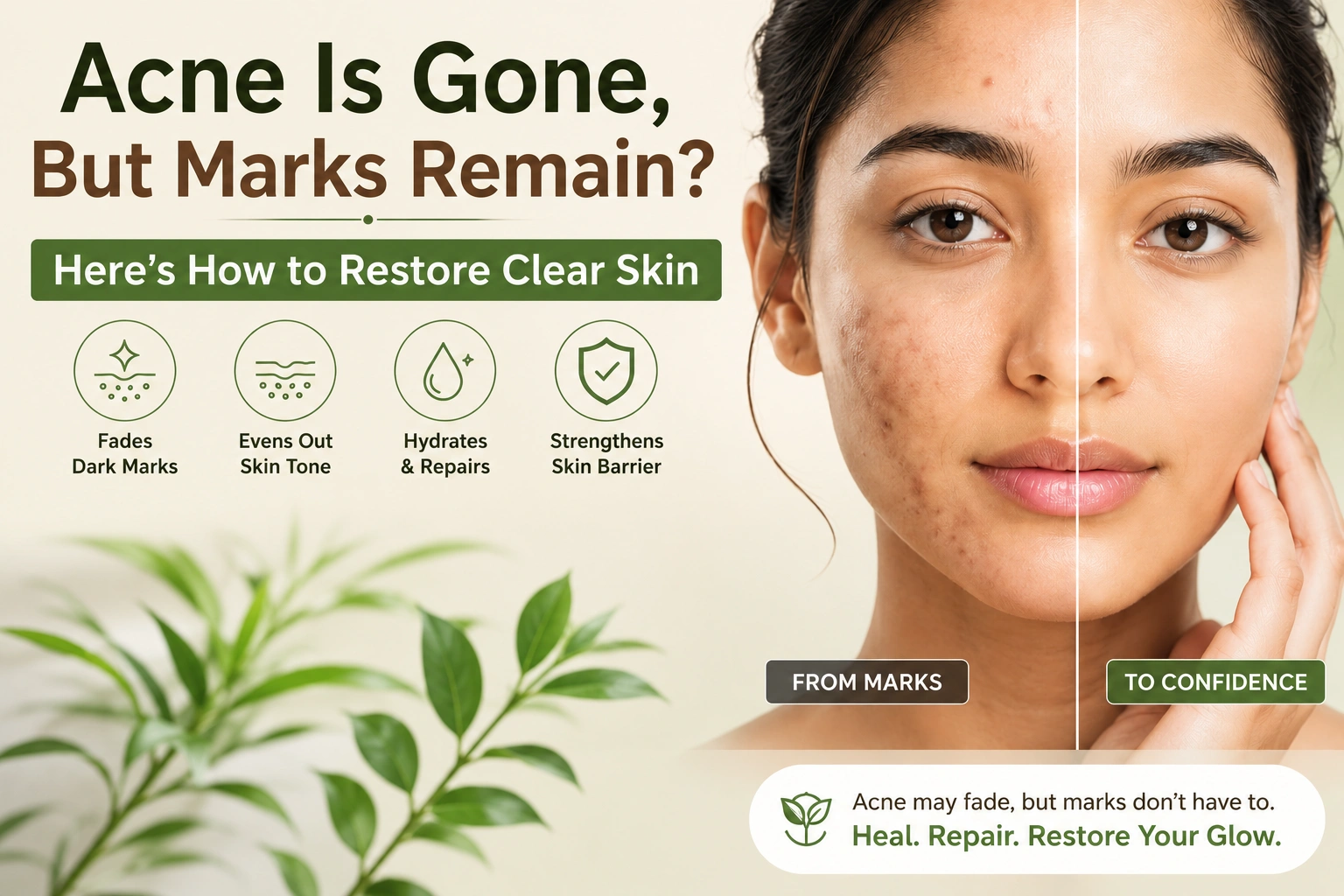
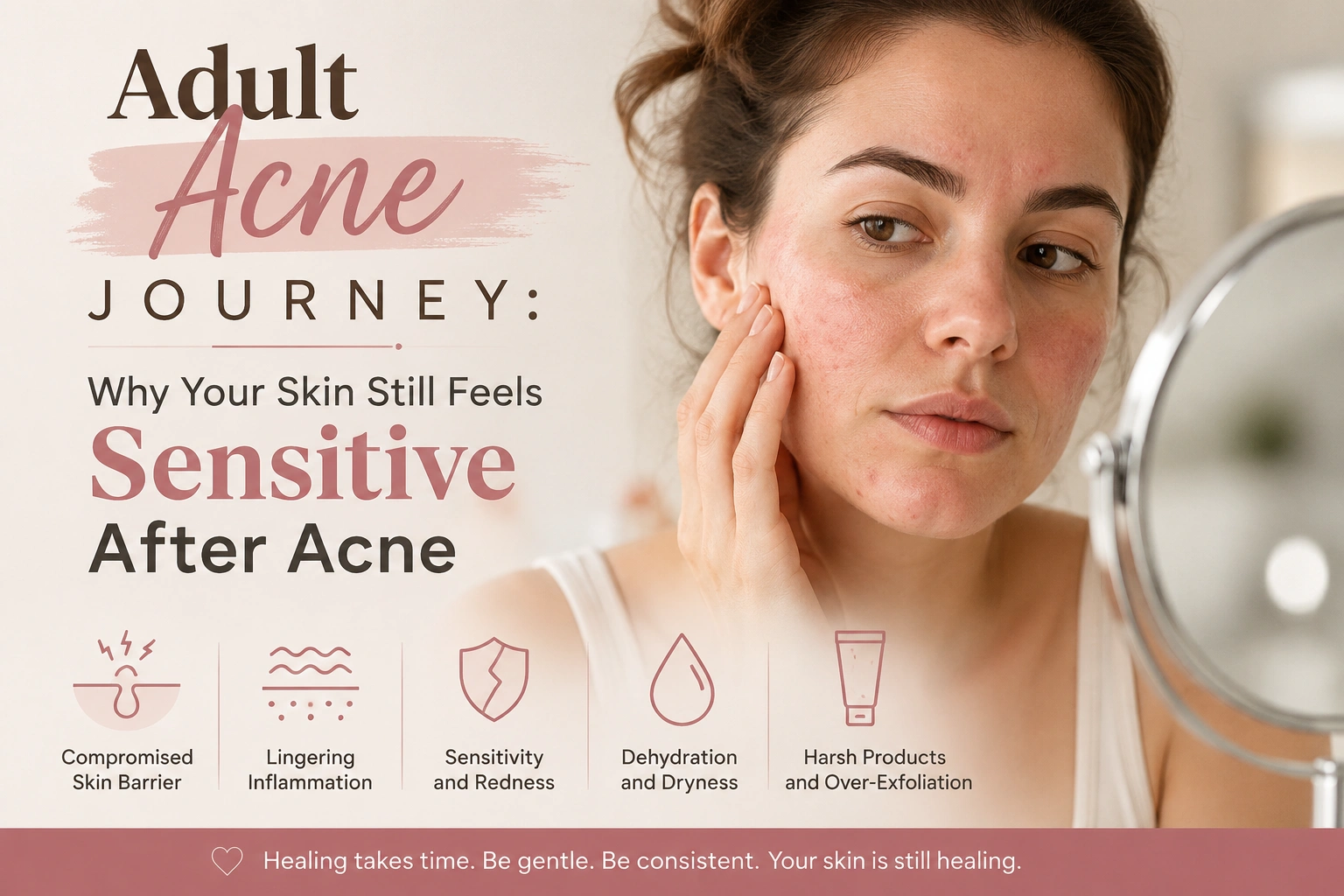
Your acne may have gone, but the marks left behind can still affect your skin. Acne can leave behind dark spots, red or pink marks, or changes in skin texture. These concerns can last longer than the original breakout and may make the skin tone or texture appear uneven. A 2026 review in the American Journal of Clinical Dermatology found that up to 85% of people with Fitzpatrick skin types IV to VI develop post-acne hyperpigmentation after inflammatory acne. However, these marks usually fade with the right care. You do not need a complicated routine to support your skin. A few simple habits and evidence-based skincare ingredients may help improve the appearance of post-acne marks over time. This guide will explain why acne marks persist and what you can do to support their recovery.
Why Do Acne Marks Stay After Pimples Heal?
When acne causes inflammation, the skin may respond by producing excess melanin, which can lead to post-inflammatory hyperpigmentation (PIH). Some people may instead develop temporary red or pink marks, known as post-inflammatory erythema (PIE).
Several factors can affect how long these marks stay. Here are the most common ones:
- Inflammation from deep or painful acne
- Picking or squeezing pimples
- Too much sun exposure
- Your natural skin tone
- Individual differences in skin healing and inflammation
These marks are different from acne scars because they don't change your skin texture. But with proper care, acne discoloration goes away.
Types of Post-Acne Marks
Not every mark left by acne needs the same treatment, and knowing what type of mark you have helps you choose the right skincare products and avoid wasting time on unnecessary treatments.
|
Type of Mark
|
How It Looks
|
Does It Fade with Skincare?
|
Best Approach
|
|
Post-inflammatory hyperpigmentation (PIH)
|
Brown, black, or grey spots
|
Yes
|
Vitamin C, niacinamide, azelaic acid, retinoids, and daily sunscreen
|
|
Post-inflammatory erythema (PIE)
|
Pink or red marks
|
Often
|
Gentle skincare, consistent sun protection, and professional assessment if persistent
|
|
Acne scars
|
Indented or raised skin
|
No
|
Microneedling or dermatologist procedures
|
How Long Does It Take for Marks to Fade?
Every person's skin heals at a different pace. Some marks fade quickly, while others need more time.
Several things can affect your skin's recovery. These include:
- Your age
- Your skin type
- The depth of the original breakout
- Daily sun protection
- Your skincare routine
Post-acne marks can take several weeks to several months to fade, and some may persist longer depending on the type of mark, skin tone, inflammation, sun exposure, and treatment. Staying consistent with your routine supports skin brightening after acne.
Build a Simple Routine for Acne Marks Recovery
A simple skincare routine gives your skin the support it needs easily. You don't need many products to see steady improvement.
1. Cleanse Gently
Your cleanser should remove dirt and sunscreen without making your skin feel dry, and a gentle cleanser helps protect your skin barrier while your marks fade.
Here's what to keep in mind when cleansing:
- Wash your face twice a day.
- Use lukewarm water.
- Avoid scrubbing your skin.
- Choose a fragrance-free cleanser.
A simple cleansing routine helps protect your skin barrier and prevent irritation.
2. Keep Your Skin Hydrated
Hydrated skin can feel more comfortable, and even oily or acne-prone skin may benefit from a suitable moisturizer.
Follow these simple hydration tips:
- Apply moisturizer after cleansing.
- Pick one that matches your skin type.
- Use it every morning and night.
- Avoid greasy products.
Moisture supports your skin while it repairs itself, and it also helps reduce dryness that can come from active skincare ingredients.
3. Never Skip Sunscreen
Sun exposure can make post-acne marks darker, and daily sunscreen helps protect your progress.
To protect your skin, remember these steps:
- Use SPF 30 or higher.
- Apply sunscreen every morning.
- Reapply if you stay outdoors.
- Cover exposed skin with a hat when possible.
Sun protection prevents marks from becoming darker. It also supports long-term acne mark recovery.
Ingredients That Help Fade Marks
Some skincare ingredients can help fade post-acne marks, and choosing the right ones can make your routine more effective.
1. Vitamin C
Vitamin C helps improve the appearance of dark spots while supporting healthier-looking skin. It also protects your skin from daily environmental stress.
Here are some reasons people use Vitamin C:
- Helps reduce visible dark spots.
- Supports brighter-looking skin.
- Works well in morning routines.
- Pairs well with sunscreen.
Regular use may help improve skin brightening after acne over time. But start slowly if your skin is sensitive.
2. Niacinamide
Niacinamide is known for its calming effect on the skin. It also helps support a stronger skin barrier.
You may benefit from Niacinamide because it can:
- Reduce excess oil.
- Calm redness.
- Support smoother-looking skin.
- Work well with many skincare routines.
Many skin types tolerate this ingredient well. It can also help improve uneven skin tone with consistent use.
3. Azelaic Acid
Azelaic acid is often used for acne-prone skin because it works gently while helping reduce visible marks. It is suitable for many skin types.
Some of its benefits include:
- Helps reduce redness.
- Supports clearer-looking skin.
- May reduce future breakouts.
- Can be used in simple skincare routines.
Using it consistently may help improve acne discoloration. Introduce it slowly to avoid irritation.
4. Retinoids
Retinoids encourage faster skin renewal. This replaces older pigmented cells.
Here are a few important tips before using retinoids:
- Start with a low strength.
- Use only at night.
- Apply moisturizer afterward.
- Wear sunscreen every morning.
Your skin may need time to adjust during the first few weeks, and consistency usually gives better results.
Choosing the Right Pigmentation Product

When choosing a pigmentation serum, go for:
- Vitamin C
- Niacinamide
- Tranexamic acid
- Alpha arbutin
- Licorice root extract
Introduce one product at a time, as a good pigmentation serum takes a few weeks to show results.
When Should You See a Dermatologist?
Home care works for many people. But some marks need professional treatment. A dermatologist can recommend treatments based on your skin type.
You should consider booking an appointment if:
- Your marks stay the same for several months.
- You notice deep acne scars.
- You continue getting painful acne.
- Your marks become darker instead of lighter.
- Over-the-counter products do not help.
Professional treatments may include prescription creams, or microneedling, and early treatment can also help prevent long-term uneven skin tone.
Conclusion
Acne marks take time to fade. But they usually improve with consistent care. A gentle routine and the right ingredients can support healthy skin without causing extra irritation. Stay patient and avoid changing products too often, and small improvements become easier to notice over time. Following a simple routine can make acne mark recovery more manageable and help your skin look clearer. For reliable skincare options that support your routine, you can also explore products from SkinPal.
FAQs
1. How can you fade acne marks faster?
You can fade acne marks faster by using sunscreen every day, following a consistent skincare routine, and choosing ingredients like vitamin C or retinoids. Also, avoid picking your skin because it can make the marks last longer.
2. Can acne marks disappear on their own?
Yes. Most post-acne marks fade on their own over time. But the process may take a few weeks or several months, depending on your skin type and how well you protect your skin from the sun.
3. Which ingredients work best for acne marks?
Vitamin C and alpha arbutin are among the most effective ingredients for reducing post-acne marks. Also, they help reduce excess pigment and support healthy skin renewal.
4. When should you see a dermatologist for acne marks?
See a dermatologist if your marks do not fade, become darker, or you have deep acne scars. A dermatologist can recommend treatments that match your skin type and concerns.




 Successfully Added!